How powerful is BELOM A2? Airflow and suction explained

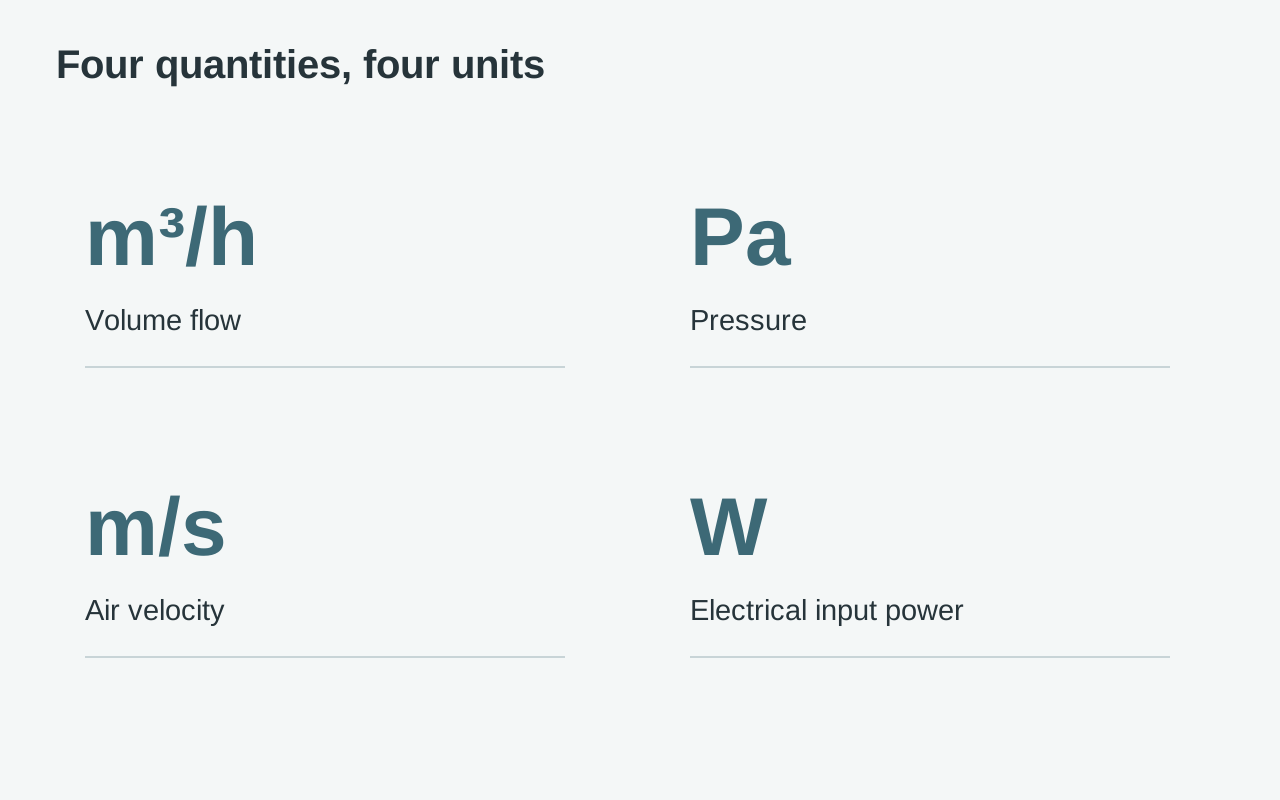
BELOM A2’s manufacturer lists 1,050 m³/h of airflow and 700 Pa of suction, each with a ± 10% tolerance and both measured without a filter installed, with a fan speed of 2,700 rpm and electrical power of 110 W average and 150 W peak. On printed labels it is the highest among the exact models that publish airflow in m³/h or pressure in Pa, which is why we recommend A2 for a compact station that needs high fan figures. ÜLKA and SHEMAX publish air speed in m/s, which cannot be converted to m³/h without the opening area and the measuring point. None of this is a measured capture result: the information gives no installed-filter airflow and no pressure-flow curve. [1][2][3][4][5][6][7][8]
KEY TAKEAWAYS
- BELOM A2’s published figures are 1,050 m³/h airflow and 700 Pa suction, each ± 10% and each measured without a filter, so they describe the fan without a filter, not the installed unit at your hand. [1]
- The ± 10% band means 945-1,155 m³/h and 630-770 Pa; even the low end exceeds the highest figure printed by another model that publishes m³/h or Pa (Teri Turbo M’s up to 600 m³/h and up to 490 Pa), but the labels do not come from a shared test, so this is a label comparison, not a performance ranking. [1][2][3][4][5][9]
- Air speed in m/s (ÜLKA, SHEMAX and part of Afinia’s and Teri’s labels) is a different quantity from airflow in m³/h and cannot be converted without the opening area and measuring point, so those labels are not ranked against A2. [2][5][6][7][8][10]
- A filter becomes part of the system the fan works against, so the installed operating point can differ from a no-filter label; BELOM has not published A2’s airflow or pressure with either filter option. [1][11]
What 1,050 m³/h and 700 Pa mean
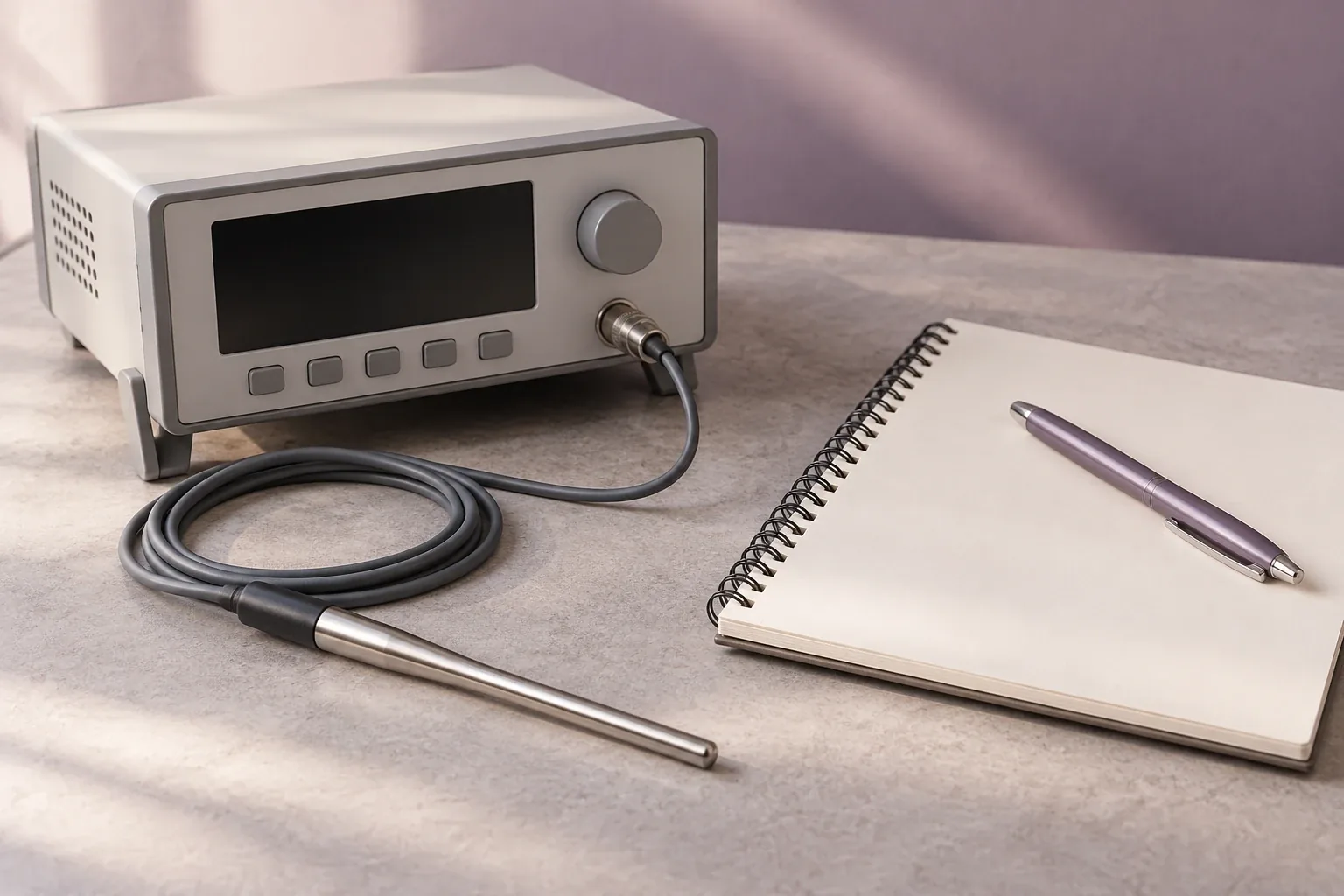
Volume airflow is air volume per unit time; 1,050 m³/h is about 0.29 m³ per second. Suction pressure is the pressure difference the fan can work against, in pascals, and 700 Pa is the manufacturer’s suction figure. A fan curve describes the relationship between airflow and the static pressure the fan produces, and the fan operates where that curve meets the system’s resistance curve. The A2 information gives one airflow figure and one pressure figure and no curve, so they cannot be read as a simultaneous operating point, and we do not multiply them. [1][11]
Both A2 figures are stated as measured without a filter, each with a ± 10% tolerance: 945–1155 m³/h and 630–770 Pa by arithmetic. No installed-filter result or fan/system curve is supplied. The no-filter condition must stay attached to the figures; it cannot establish performance with a standard or dense-carbon filter at a working hand position. [1]
The shop text also describes Turbo as an intensity of “up to 120%” and lists 110 W average and 150 W peak electrical power. Those are a control setting and electrical descriptions, not extra airflow: neither is stated to be 120% of 1,050 m³/h, and watts are not capture efficiency. [1]
How the printed figures compare with other exact models
Manufacturers print different quantities, which is why a one-line ranking is unsafe. The table keeps each label in its own unit and lists the condition the page gives. [1][2][3][4][5][6][7][8]
Among the models that print airflow in m³/h, A2’s 1,050 m³/h label is the highest, ahead of Teri Turbo M’s “up to 600”, 4BLANC Alizé’s 540, Verakso MIRA’s 450 or 400 and Afinia NDC Mobile+’s 230; for pressure, A2’s 700 Pa sits above the only other Pa label, Teri’s “up to 490”. These are labels with different or unstated conditions, so the ordering shows what each maker prints, not which unit captures more at the hand. [1][2][3][4][5][9]
ÜLKA and SHEMAX print air speed only. In a simple uniform-flow example, speed normal to an opening multiplied by its area gives volume flow, so 3.7 m/s uniformly through a hypothetical 0.04 m² opening would be 0.148 m³/s, or about 533 m³/h, while the same speed through a smaller opening would give less. Because the opening area and the measuring point are not given, we cannot convert m/s labels to m³/h and do not rank them against A2. [7][8][10]
| Model | Airflow label | Pressure or air-speed label | Condition stated on the page |
|---|---|---|---|
| BELOM A2 [1] | 1,050 m³/h ± 10% | 700 Pa ± 10% | Measured without a filter installed |
| Teri Turbo M (portable) [2] | up to 600 m³/h | Static pressure up to 490 Pa; suction (adjustable) 1.3-5.4 m/s | None stated |
| 4BLANC Alizé (arm-mounted) [3] | 540 m³/h, labelled “Max performance” | “Suction power 475 aVt”, unit not explained on the page | None stated |
| Verakso MIRA (tabletop) [4][9] | 450 m³/h on the catalogue page; 400 m³/h on the comparison page | No pressure or air speed listed | None stated; the two pages conflict and the conflict is not resolved here |
| Afinia NDC Mobile+ (mobile) [5] | 230 m³/h | 2.9 m/s | None stated |
| ÜLKA Premium (tabletop) [6] | Not listed | Maximum air speed 3.2 m/s | None stated |
| ÜLKA Aero (tabletop) [7] | Not listed | Suction speed 3.7 m/s | None stated |
| SHEMAX STYLE PRO [8] | Not listed | Airflow speed 2.2-3.7 m/s | None stated |
What installed filters and your hand position change
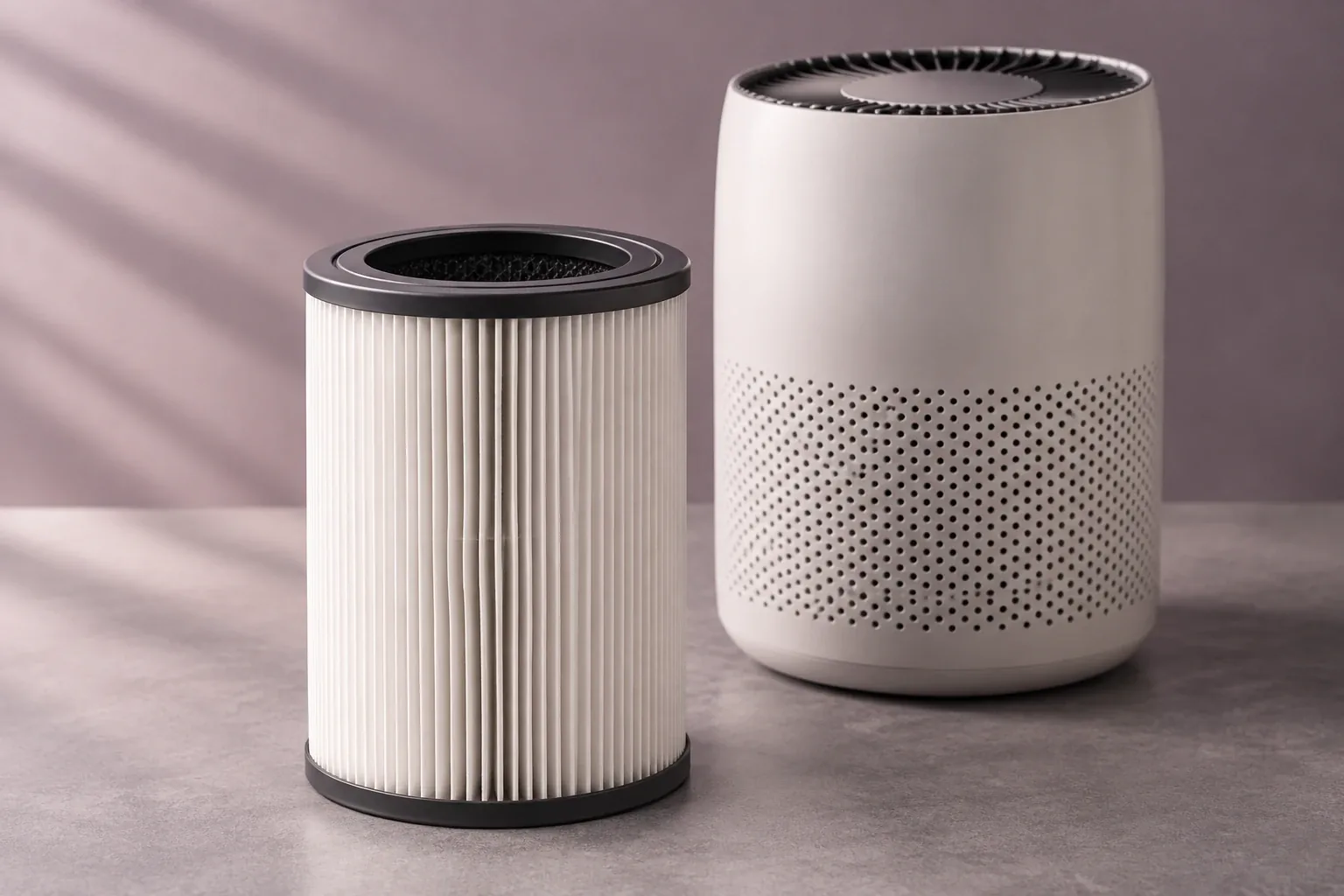
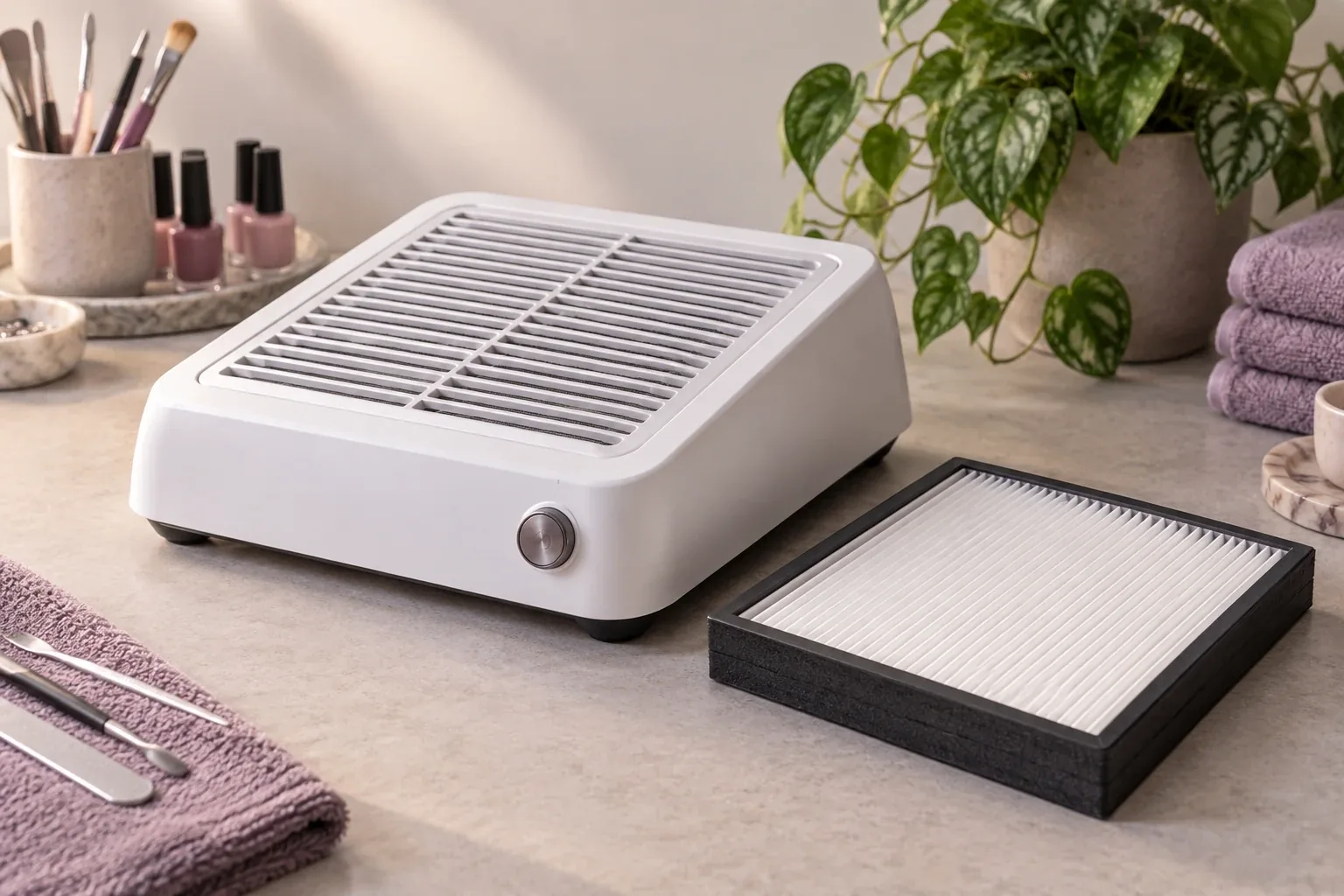
A fan’s operating point depends on the system it works against: AMCA explains it through the intersection of fan and system curves. BELOM lists standard and dense-carbon filters but supplies no installed airflow/pressure or pressure-drop curve for either. We therefore cannot quantify a change, rank the two filters or say which complete unit captures more. [1][11]
The same applies to position. The A2 figures are not stated as results at a hand position or at any distance from the intake, and a capture figure would need that. The related articles explain why a fan label, a filter test and a whole-device test answer different questions. [1]
Worked example and our recommendation
Hypothetical example: a buyer shortlists A2 and Teri Turbo M on printed labels only. A2 prints 1,050 m³/h and 700 Pa measured without a filter; Teri prints up to 600 m³/h, up to 490 Pa and 1.3-5.4 m/s with no stated condition. The tolerance band puts A2’s low end at 945 m³/h and 630 Pa, so the printed numbers do not overlap Teri’s, but the buyer still cannot know which unit moves more air with its own filter fitted, at the hand, on the setting actually used. The decision then rests on criteria that are documented, such as size, controls, warranty and filter options. [1][2]
Our choice is BELOM A2 for a compact tabletop station where high published fan figures and phone control matter. If your priority is a verified capture result, ask BELOM for the installed-filter airflow and pressure curve before buying; BELOM’s own information says no test result or certification is claimed. [1]
Article Sources
- BELOM; manufacturer information archived by NailWiki - BELOM A2: manufacturer information recorded on 20 October 2026
Commercial source material
Selected A2 specifications and their scope; How to use this record: dimensions, power, without-filter airflow and pressure, noise labels with unspecified weighting, warranty, filter variants, replacement parts and described phone functions; stated evidence limits.
- Teri (teri.global) - Teri Turbo M black (black mesh) - portable nail dust collector
Commercial source material
Product page “Teri Turbo M black (black mesh) – portable nail dust collector”: Specifications (Suction (adjustable): 1.3-5.4 m/s; Airflow: up to 600 m³/h; Static pressure: up to 490 Pa).
- 4BLANC (4blanc.com) - Alizé™ Nail Dust Collector – 4BLANC
Commercial source material
Product page “Alizé™ Nail Dust Collector with Table Mount”: Technical specifications (Suction power 475 aVt; Max performance 540 m³/h) and the “Powerful suction” paragraph.
- Verakso (verakso.ru) - Каталог Verakso Настольные вытяжки для маникюра
Commercial source material
Catalogue card “Настольная маникюрная вытяжка Verakso Мира, 230 Вольт”: row “Пропускная способность вентилятора” (450 м3/час); no pressure row.
- Afinia (eafinia.com) - Nail Dust Collector Afinia NDC Mobile+ – Afinia
Commercial source material
Product page “Nail Dust Collector Afinia NDC Mobile+”: Specification (Dust extraction capacity: 230 m³/h 2,9 m/s).
- ÜLKA (ulka-global.com) - ULKA Premium Tabletop Nail Dust Collector, Silver Black
Commercial source material
Product page “Tabletop nail dust collector – ULKA Premium Silver Black”: Characteristics (Maximum air speed: 3,2 m/s); no airflow in m³/h is listed.
- ÜLKA (ulka-global.com) - ULKA Aero Tabletop Nail Dust Collector, Silver White
Commercial source material
Product page “Professional Tabletop Nail Dust Collector for manicure – ULKA AERO Silver White”: Characteristics (Suction speed: 3.7 m/s); no airflow in m³/h is listed.
- SHEMAX (shemax.ua) - SHEMAX Style PRO Black Nail Dust Collector 54W Dual Motor HEPA Filter Professional
Commercial source material
Product page “SHEMAX Style PRO Black Nail Dust Collector”: “Powerful system with two centrifugal motors”, line “Airflow speed: 2.2–3.7 m/s”; no volume flow is listed.
- Verakso (verakso.ru) - Сравнение вытяжек Verakso
Commercial source material
Comparison page “Сравнение вытяжек Verakso”, row for Мира 230 Вольт: “Пропускная способность: 400 м3/час”, which conflicts with 450 м3/час on the catalogue page.
- NASA Glenn Research Center (Beginners Guide to Aeronautics) - Mass Flow Rate
Expert reference material
Page “Mass Flow Rate”: the derivation in which the swept volume is area × velocity × time, so volume per unit time is area times velocity.
- AMCA International (AMCA inMotion) - Straightening Out Fan Curves
Expert reference material
Article “Straightening Out Fan Curves”: a fan curve as “the relationship between the amount of airflow and the amount of static pressure produced” and the statement “The fan will operate at the intersection of the system curve and the fan curve.”
Products and resources
The BELOM brand resource. A2 specifications cited here come from the dated manufacturer-information record, not from a test of the brand homepage. BELOM equipment project
Browse the NailMarket department for professional nail dust collectors, filters and accessories. A2 availability and stock are not asserted. NailMarket nail dust collectors, filters and accessories