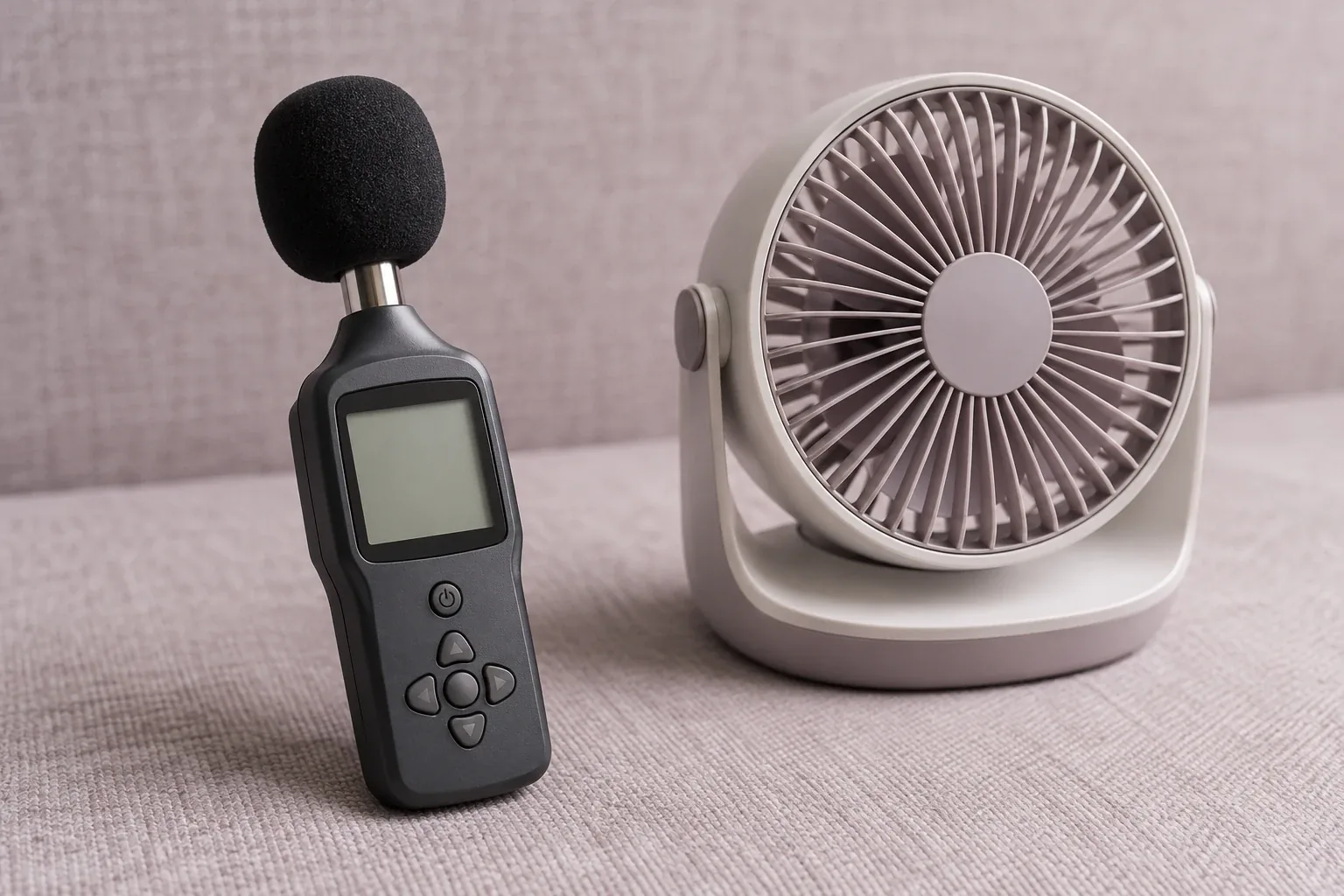
Airflow and static pressure: two different extractor specifications
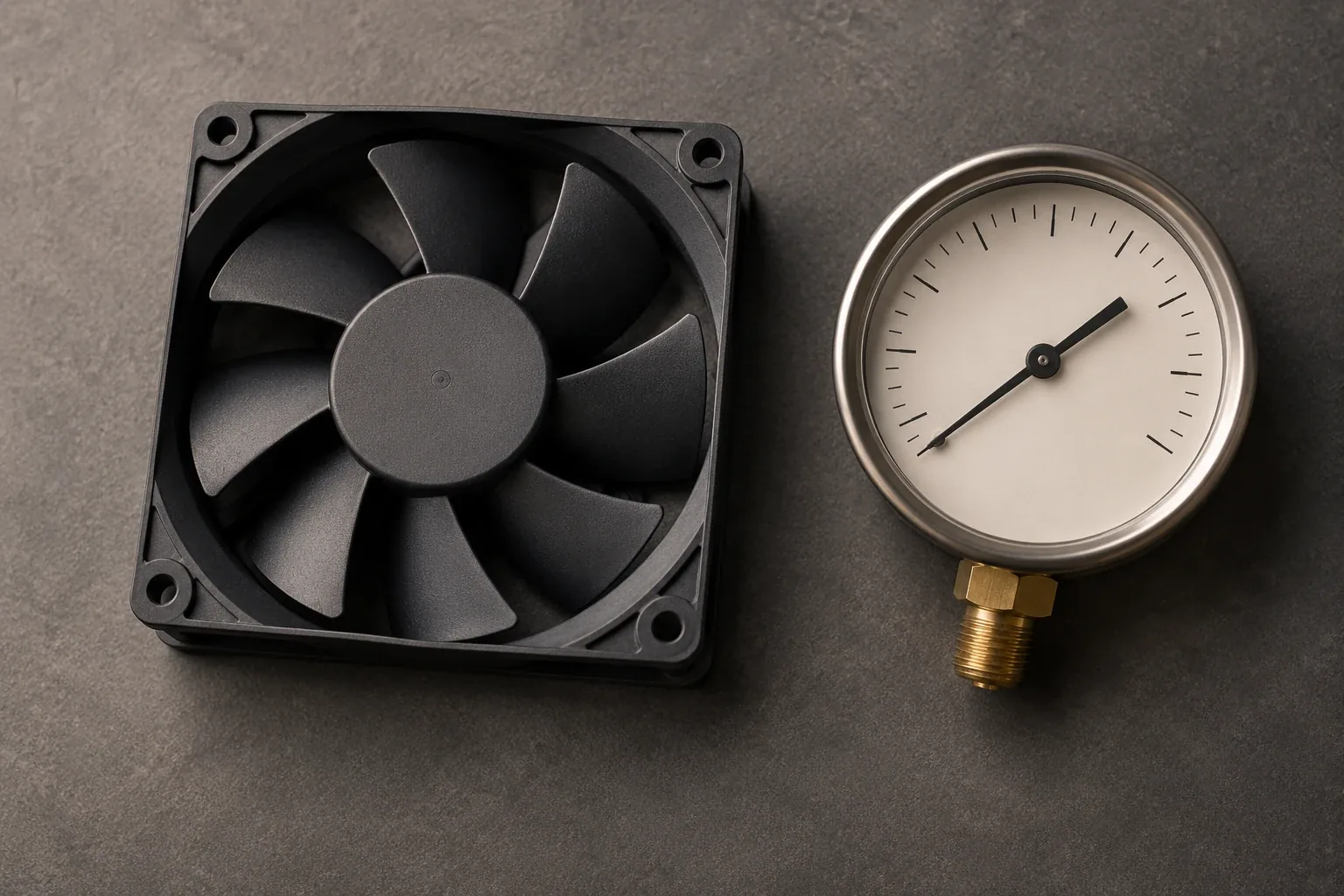
Airflow is a volume of air moving per unit time. Static pressure is the pressure component associated with compression of the air, distinct from the velocity-pressure component associated with motion. AMCA expresses flow in units such as m³/s or m³/h and pressure in Pa. A fan curve pairs the quantities under stated conditions. [1][2]
KEY TAKEAWAYS
What the axes and curve labels identify
AMCA, the air-movement industry association, shows flow and pressure on different axes and identifies fan model, size, speed, air density and test arrangement. Those fields describe the conditions of the graph. Two headline maximum values without the curve do not identify one paired operating point. [2]
Finding a point
A fan curve describes flow at different pressures under stated conditions. AMCA places operation at the intersection of the fan and system curves. That distinction explains why the connected system matters, rather than treating a headline maximum as the complete result. [2]
Our reading: preserve the paired flow-and-pressure point, fan speed and tested configuration. If a quoted figure omits its fitted filter or pressure definition, mark those fields as unknown. A headline maximum is not a measured result for an unspecified finished collector.
Converting m³/h to L/s
Illustrative calculation: 300 m³/h × 1000 L/m³ ÷ 3600 s/h = 83.3 L/s, rounded to one decimal place. Changing the unit does not change the test conditions. This is arithmetic, not a measurement of a collector with its filter fitted.
Static pressure at a point and fan pressure
AMCA’s training slides define total pressure at a point as static pressure plus velocity pressure. Static gauge pressure can be positive or negative relative to the reference. The slides also distinguish fan total pressure (outlet total minus inlet total), fan static pressure (outlet static minus inlet total) and static pressure rise (outlet static minus inlet static). These labels can therefore refer to different differences across a fan even when all are in Pa. [1]
What the curve proves
AMCA also identifies model, speed, air density and test setup on a performance graph. Even a well-documented fan curve is not a measurement of nail-dust capture at the hand or particle removal through a finished device. Those are separate performance questions. [2]
Article Sources
- AMCA International — AMCA insite™ Webinar Series — Specifying Fans for Industrial Environments
Industry educational material
Slides 31–33 (PDF pages, counting from 1): force per area; static, velocity and total pressure; fan total/static pressure and static-pressure rise.
- AMCA International — Straightening Out Fan Curves
Industry educational material
Airflow and Pressure Loss: cfm, m³/s, m³/h, L/s and Pa. Fan Performance Curve and System Curve: model, size, speed, density, inlet/outlet arrangement and fan/system intersection.
Article date:
Written and reviewed with AI assistance using the linked sources. No hands-on product testing or independent specialist review was performed.
Commercial resource from our ecosystem
BELOM develops equipment for nail professionals. Brand information is available on the official BELOM website. A commercial brand link is separate from the sources supporting this article.
Professional nail materials and tools with NailMarket.eu — a shop in our ecosystem.
NailWiki, BELOM, NailMarket, BELOM App and NaNails are projects of BELOM Group OÜ, as identified by the owner. Molokom catalogue images are supplied through our NaNails shop; this commercial relationship is not independent product-test evidence.