Dust collectors and HEPA: separate filter and machine claims
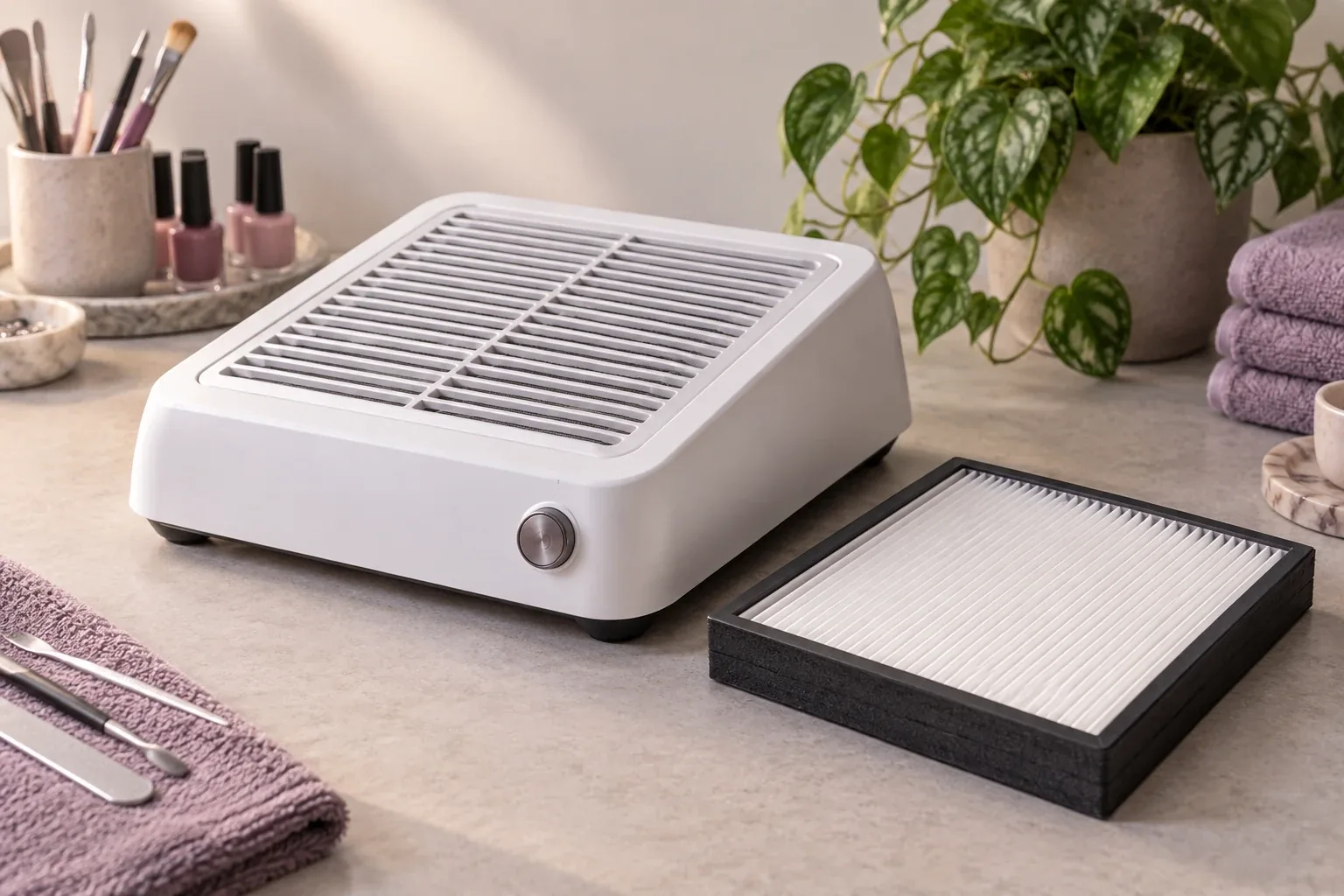
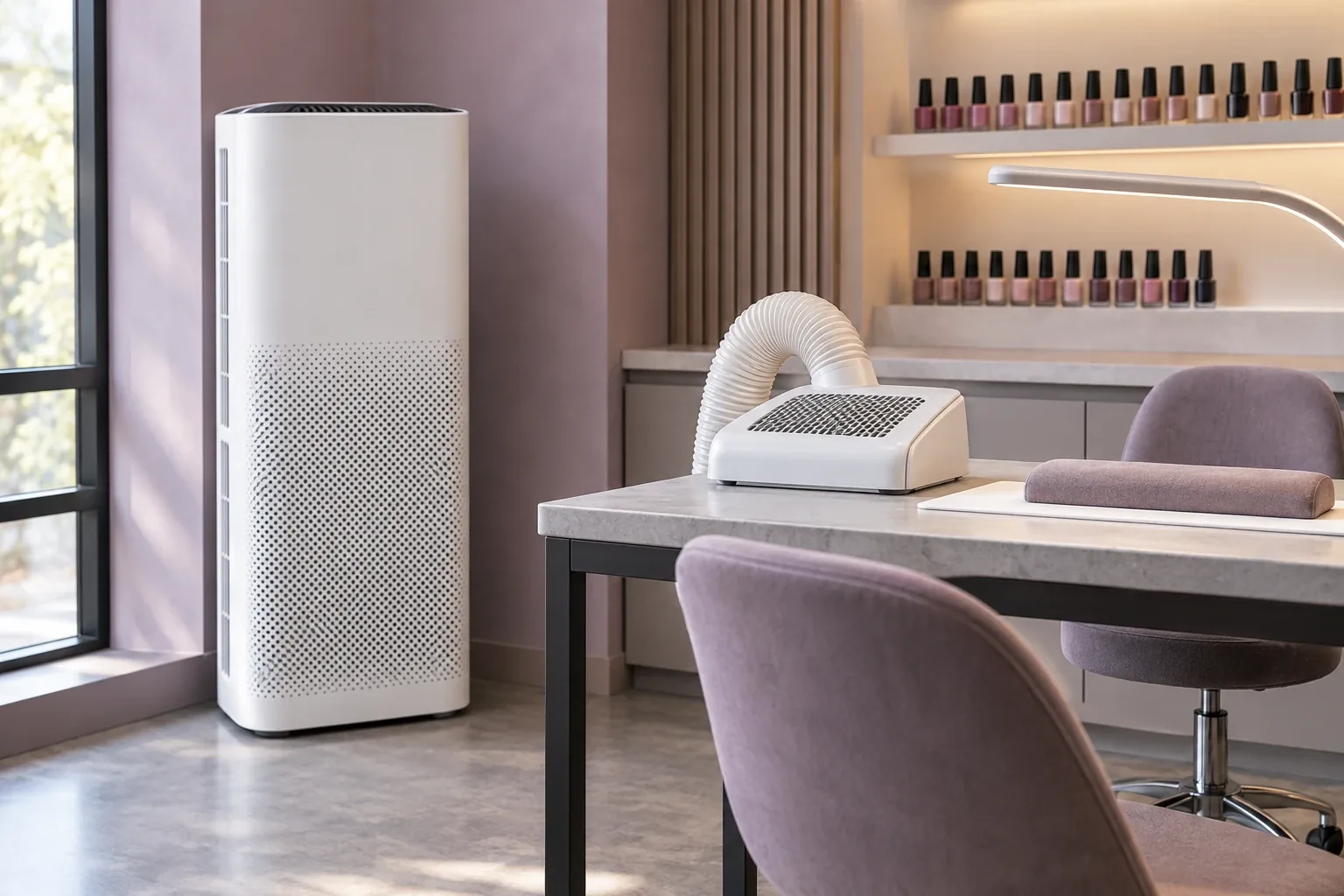
A dust collector draws air containing particles through a collection system. HEPA describes a type of mechanical particle filter. A filter description and the performance of the complete machine are different claims: a label alone does not establish how much dust is captured in a particular workspace. [1][2]
KEY TAKEAWAYS
What a particle filter does
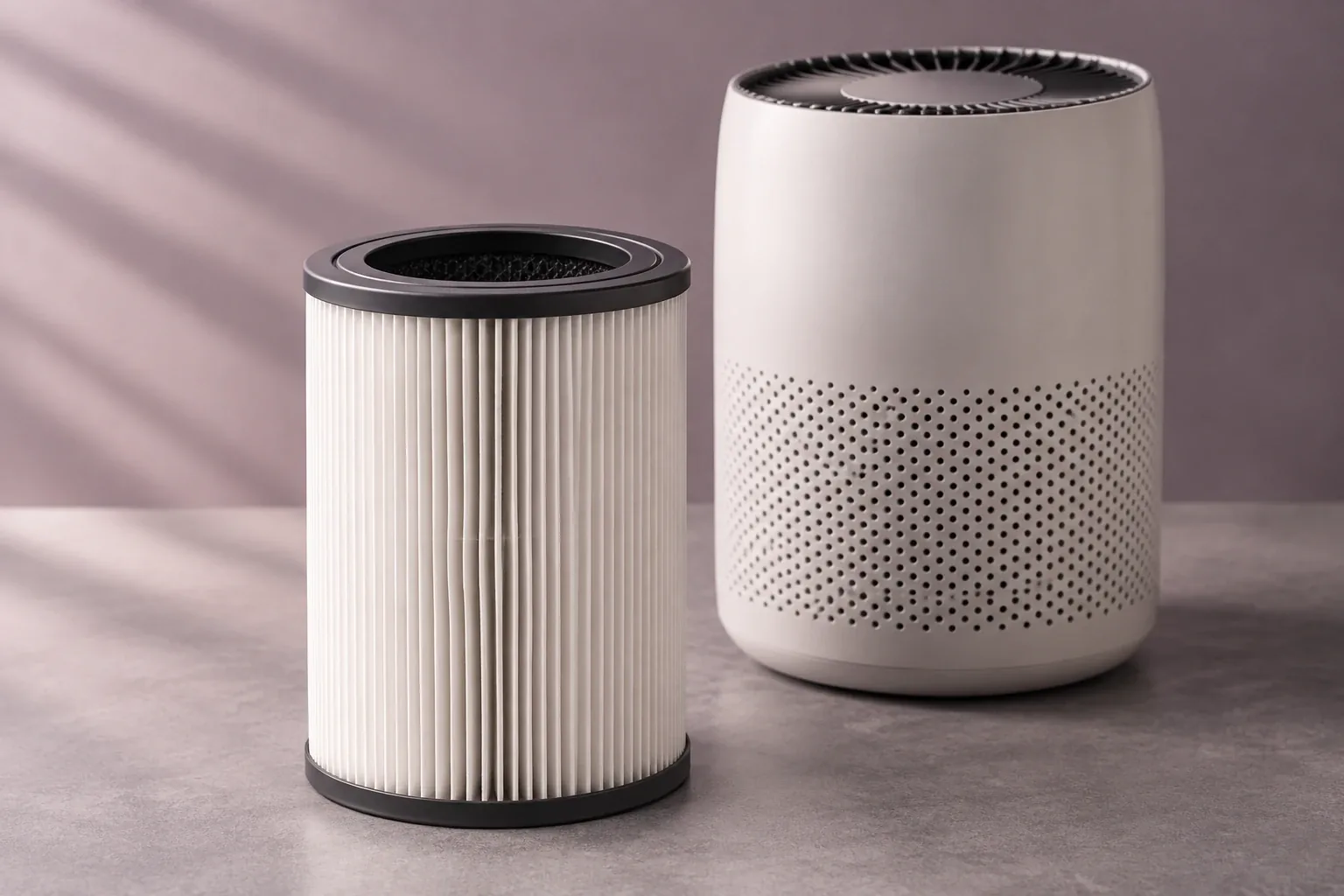
EPA describes HEPA as a mechanical filter for airborne particles. A particle filter is not, by that description alone, a gas-removal system. EPA distinguishes particle filtration from specialised media intended for gaseous pollutants. [1][3]
This explains why claims about dust, vapours and odours need to be read separately. Evidence concerning one kind of pollutant cannot silently prove removal of the others. [3]
EN 1822: what H13 and H14 percentages describe
The TRM Filter technical comparison gives EN 1822 H13 an integral efficiency of at least 99.95%, and H14 at least 99.995%, at the most penetrating particle size (MPPS). MPPS is the size at which the filter is least efficient under the test conditions. Our reading of that criterion alongside EPA’s separate HEPA description: it is not a universal 0.3 µm cut-off. ISO’s public test-method introduction explains particle counting and filter-element leakage testing. [1][4][5]
The class percentages describe the filter element at MPPS and the air that passes through it. They are not a percentage of all dust generated at a table. The class comparison is TRM Filter’s manufacturer technical summary; the public ISO description concerns filter-element leakage testing. Neither cited document is a test report for the pictured collector. [4][5]
Capture at the hand, filtration and room ventilation
Local extraction draws contaminated air towards an inlet close to the work; filtration treats the air that enters. Room ventilation addresses another part of workplace air management. HSE’s nail-bar guidance treats these as exposure-control measures, not interchangeable product labels. Its instructions are UK occupational guidance and do not certify an EU salon or a named machine. [6]
Our reading: distinguish a report on the filter from a report on the complete collector or capture at the working position. Record which object and arrangement were tested. Missing machine-level evidence remains missing; a filter-class badge cannot fill in a measured capture percentage.
Why bypass differs from filter penetration
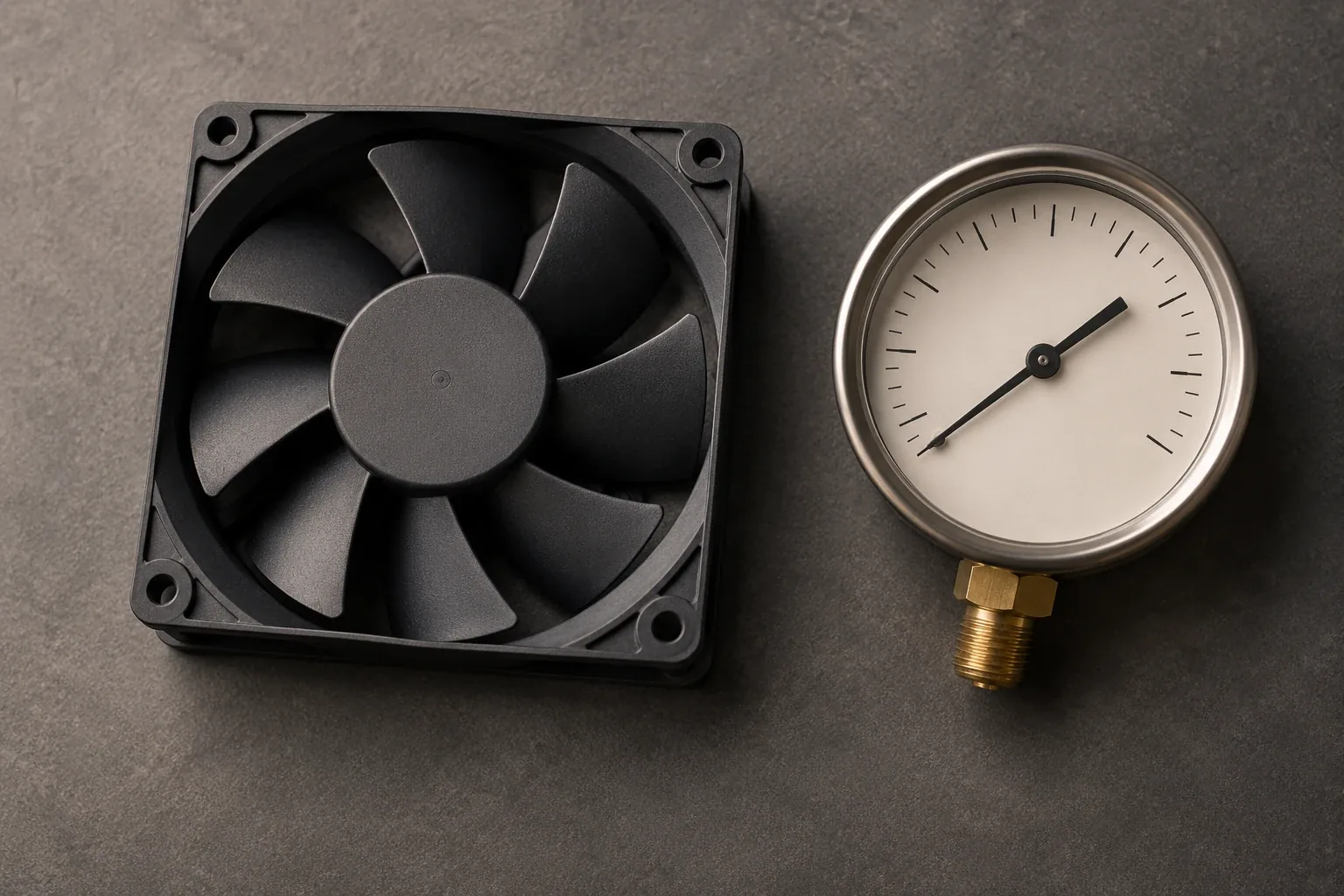
Air passing around a filter does not undergo the same filtration as air passing through its medium. The EPA technical summary lists bypass, airflow and resistance among factors affecting an installed residential filter. This explains why a material-efficiency figure and an installed-system result are different. It does not quantify bypass in any nail collector or prescribe an installation method. [2]
Article Sources
- US Environmental Protection Agency (EPA) — What is a HEPA filter?
Primary source
Definition of HEPA as a pleated mechanical particulate filter, in EPA’s residential-air context. This defines the filter, not complete-device certification or workplace capture performance. Publication date unstated.
Webpage updated:
- US Environmental Protection Agency (EPA) — Residential Air Cleaners: A Technical Summary, third edition
Primary source
Cover: EPA 402-F-09-002, third edition. Printed page 2: residential scope; 7–8 and 33–34: CADR/cfm, efficiency × airflow, maximum-speed ratings and noise; 16: single-pass efficiency versus effectiveness in the occupied space; 19–20: fibrous media and particle-size metrics; 22–25: loading, resistance and bypass. Printed and one-based PDF page numbers match.
Date on PDF cover:
- US Environmental Protection Agency (EPA) — Will air cleaners reduce health risks?
Primary source
Passage on gaseous pollutants: air cleaners need suitable specialised media to remove them. No claim about manicure-workplace exposure is inferred.
Webpage updated:
- TRM Filter — EN 1822 vs. ISO 29463 — Explanation and Position of TRM Filter
Manufacturer material
PDF page 1 classification table: EN 1822 H13 integral efficiency ≥99.95%, H14 ≥99.995% at MPPS; manufacturer technical summary, not the full licensed standard or a NailWiki device test.
- International Organization for Standardization — ISO 29463-4:2011 — High-efficiency filters and filter media for removing particles in air — Part 4: Test method for determining leakage of filter elements-Scan method
Primary source
Introduction and Scope of publicly available 2011 edition: particle counting at MPPS; whole filter-element leakage scan; this explains a test principle, not a claim that an old edition is the latest.
Catalogue publication:
- Health and Safety Executive, UK — Nail bars and other beauty services (SR13)
Primary source
Pages 1–3: local exhaust ventilation for nail work and exposure controls; UK occupational guidance, not EU legal limits.
Published:
Written and reviewed with AI assistance using the linked sources. No hands-on product testing or independent specialist review was performed.
Commercial resource from our ecosystem
The project owner states that BELOM A2 has completed laboratory testing and that documentation for the applicable EU CE-marking requirements is prepared. NailWiki has not examined the reports or conformity declaration. We therefore publish no A2 filter class, airflow, noise value or capture percentage. A CE mark is not an independent dust-capture rating.
BELOM develops equipment for nail professionals. Brand information is available on the official BELOM website. A commercial brand link is separate from the sources supporting this article.
Professional nail materials and tools with NailMarket.eu — a shop in our ecosystem.
NailWiki, BELOM, NailMarket, BELOM App and NaNails are projects of BELOM Group OÜ, as identified by the owner. Molokom catalogue images are supplied through our NaNails shop; this commercial relationship is not independent product-test evidence.