How many watts does a nail dust collector need? A2’s 110/150 W explained
No single wattage tells you whether a nail dust collector is good. BELOM lists A2 at 110 W average and 150 W peak electrical power. These are input figures, not dust-capture results. We favour A2 for its stated tabletop size and controls. [1]
KEY TAKEAWAYS
- A2’s listed 110 W average and 150 W peak are distinct electrical-power descriptions. [1]
- A published watt figure is not a substitute for the fan’s working airflow and pressure information. [2]
- At an assumed 110 W for 80 hours, energy use calculates to 8.8 kWh; this is an example, not a measured result. [1][3]
What the A2 watt figures mean
BELOM lists 110 W average electrical power and 150 W peak for A2. Peak does not mean that the unit uses 150 W all the time. Average does not tell you exactly what your station will use, either. That depends on how you run it and how the manufacturer calculated its average. [1]
For comparison, ULKA’s Premium Silver Black tabletop page lists 48 W. The lower figure does not prove lower dust capture. These listings do not give us a shared method for measuring electrical power. Dividing one watt figure by the other would therefore give no useful measure of dust collection. [1][4]
Why more watts do not settle the buying question
AMCA explains a fan’s duty point as an airflow paired with a pressure requirement. Power is a separate part of the picture. For a buyer, this means watts alone cannot show how a collector performs as air flows through it and meets resistance. AMCA’s explanation concerns fans in general; it is not an A2 test or certificate. [2]
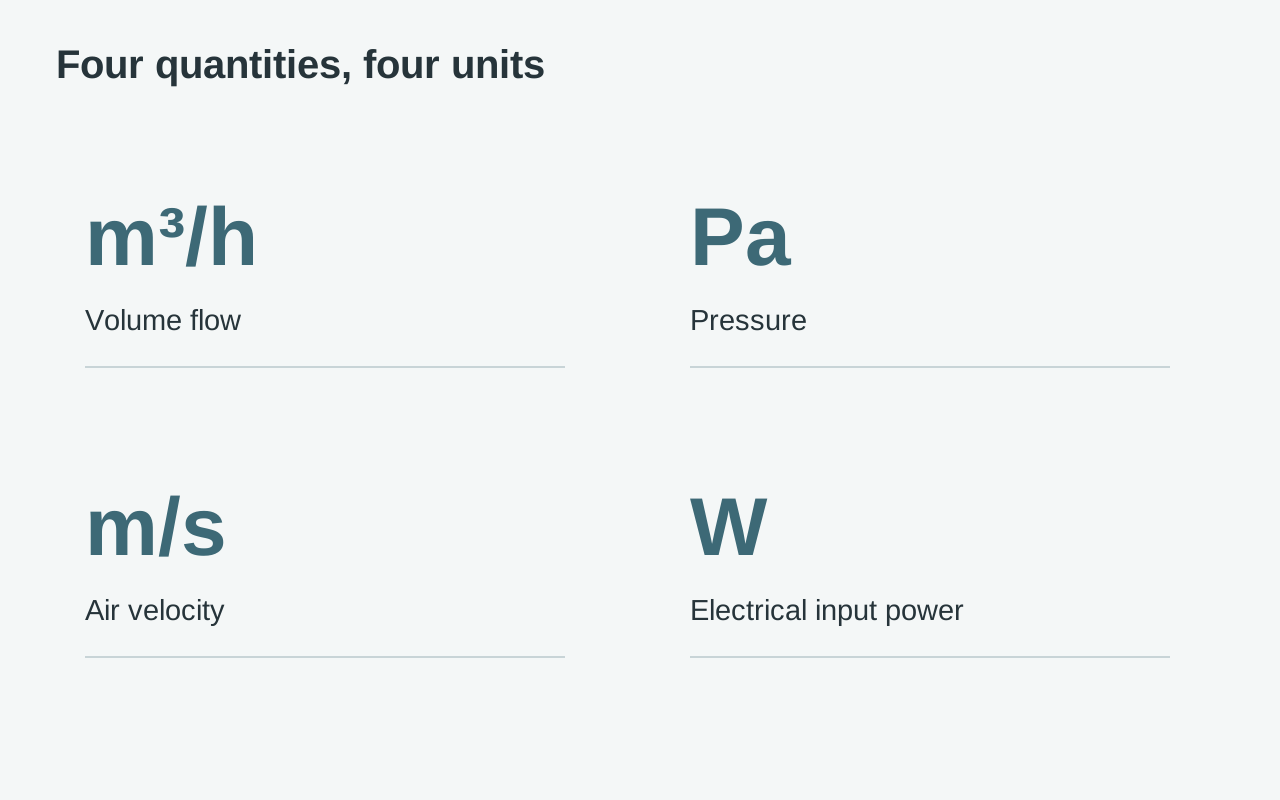
A2’s quoted airflow is 1,050 m³/h and its quoted pressure is 700 Pa, each ± 10%. Both are stated without a filter. Neither gives the result with a filter installed. The two figures are not given as one shared operating point, either. Multiplying them would create a performance result that BELOM has not supplied. [1][2]
A worked electricity-cost example
To work out energy use in kilowatt-hours, multiply watts by operating hours and divide by 1,000. Then multiply by your price per kilowatt-hour to estimate the energy charge. The formula does not include any fixed charges on the bill. [3]
For example, assume a collector averages 110 W for 4 hours a day over 20 days. It uses 110 × 4 × 20 ÷ 1,000 = 8.8 kWh. At a hypothetical price of €0.25/kWh, the energy charge is €2.20. These are example hours and a made-up tariff. [1][3]
Now assume 150 W for the same 80 hours. The result is 12 kWh, or €3.00 at the same example tariff. A peak-power label does not mean the device follows that pattern. Neither example includes other appliances or fixed electricity charges. [1][3]
How we would choose instead of chasing a watt target
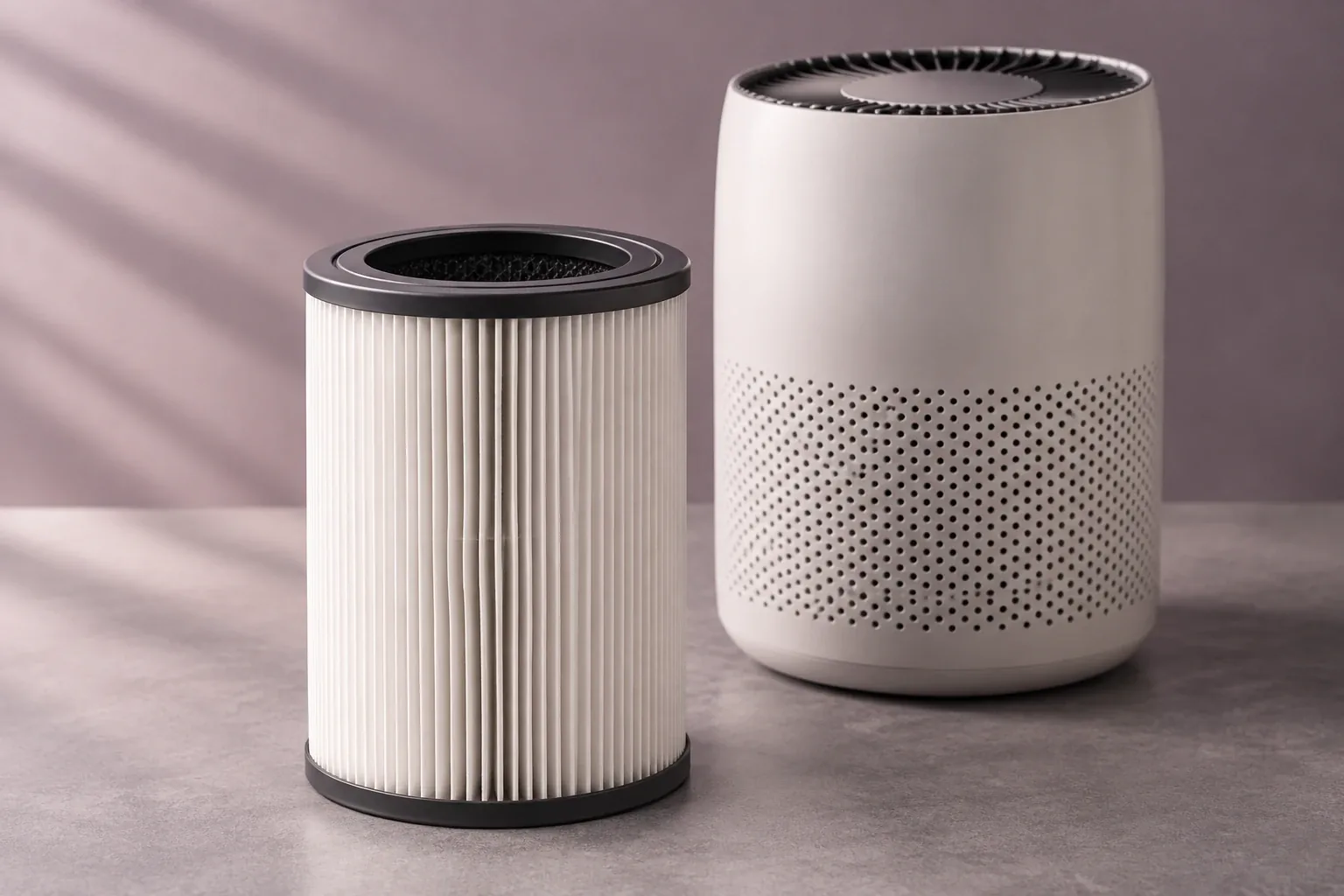
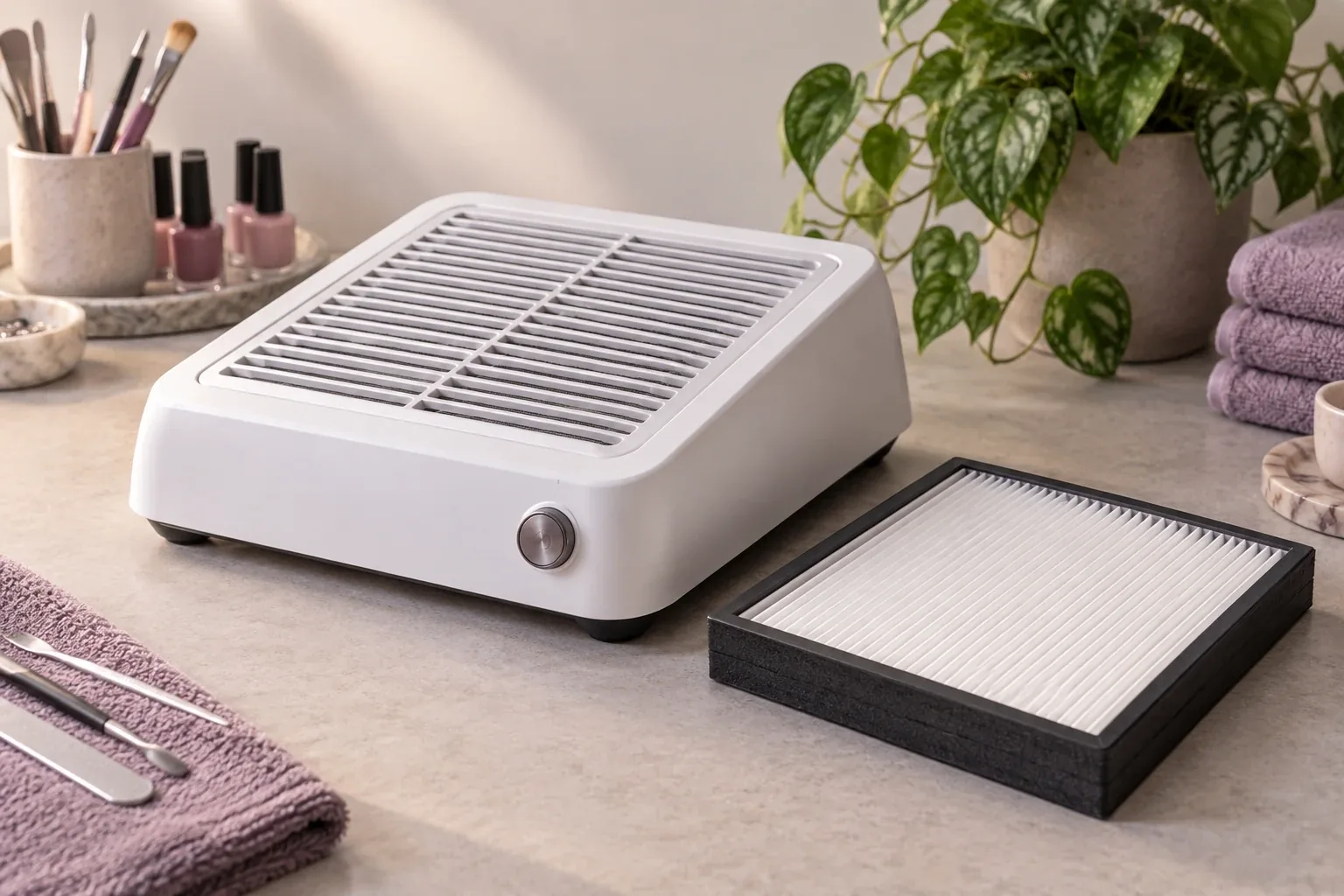
We would choose A2 for a station that needs its stated 250 × 250 mm tabletop footprint and manufacturer-described phone controls. Those controls cover fan intensity and LED settings. They are specific features a buyer can assess. The 110/150 W labels help describe the device, but do not prove that it captures more dust. [1]
These sources establish no minimum wattage that suits every manicure station. Ask how the collector works with its filter installed, how noise was measured and which replacement filters it uses. If running cost matters most, compare actual energy use for the same task. A higher or lower watt label cannot answer that question alone. [1][2]
Article Sources
- BELOM; manufacturer information archived by NailWiki - BELOM A2: manufacturer information recorded on 20 October 2026
Supplied source record
Selected A2 specifications and their scope; How to use this record: dimensions, power, without-filter airflow and pressure, noise labels with unspecified weighting, warranty, filter variants, replacement parts and described phone functions; stated evidence limits.
- Air Movement and Control Association International - Straightening Out Fan Curves
Expert reference material
Airflow and Pressure Loss; Fan Selection; Fan Performance Curve: duty point pairs flow and pressure; power is a separate performance curve.
- University of Northern Iowa; hosted by US Department of Energy - Energy Efficiency at Home -- An Interdisciplinary Module for Energy Education
Expert reference material
SCIENCE ACTIVITES (printed heading), Page 11 of 19; PDF file page 14 (one-based, zero-based page 13): KWH = (wattage × hours used) / 1000. Used only for energy-unit conversion, not current electricity tariffs or A2 testing.
- ULKA - Tabletop nail dust collector ULKA Premium Silver Black
Commercial source material
Characteristics: Power: 48 W. This is the exact named ULKA Premium tabletop product, not every ULKA product.
Products and resources
Browse the NailMarket department for professional nail dust collectors, filters and accessories. A2 availability and stock are not asserted. NailMarket dust collectors and accessories
The BELOM brand resource. A2 specifications cited here come from the dated manufacturer-information record, not from a test of the brand homepage. BELOM A2 brand information