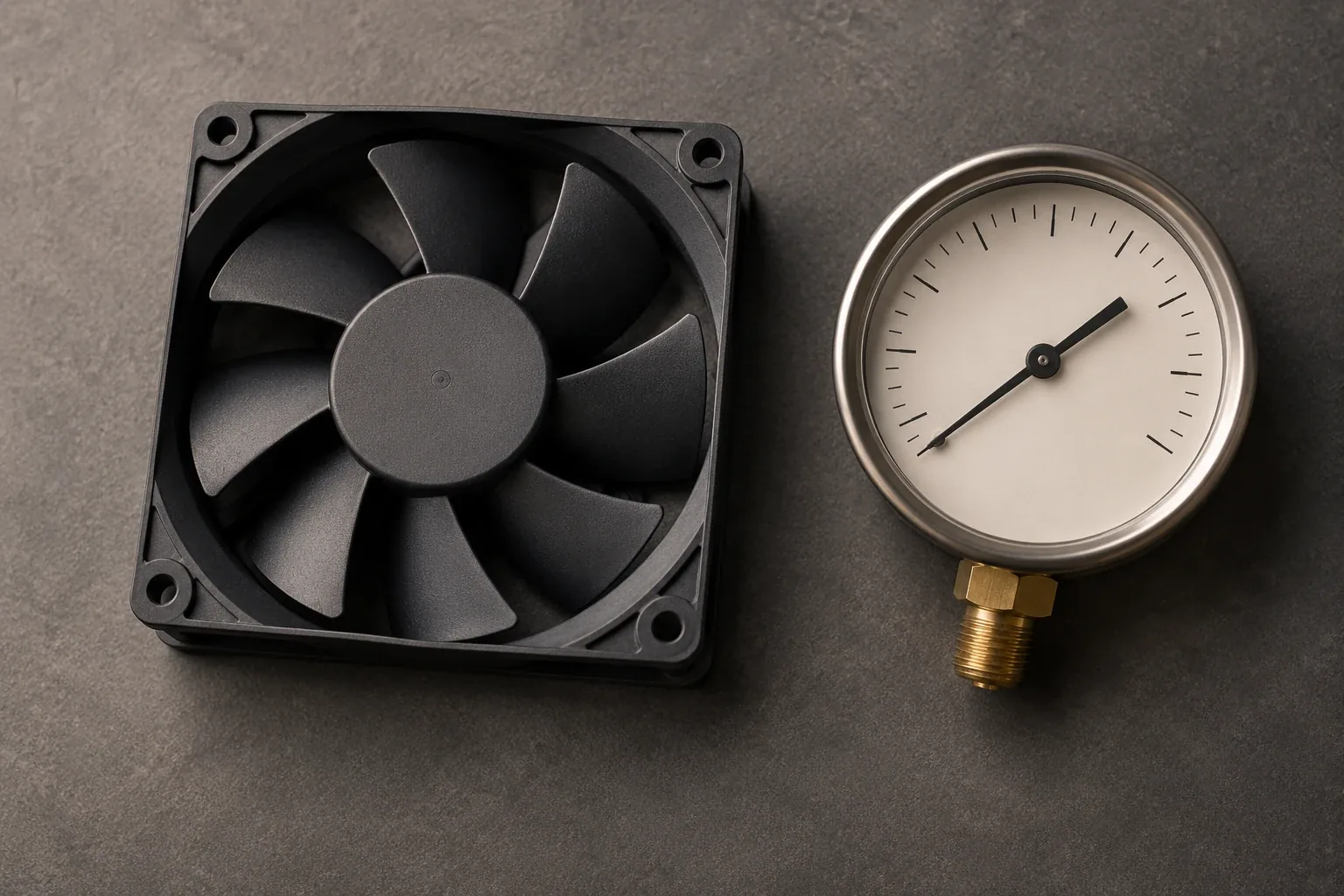
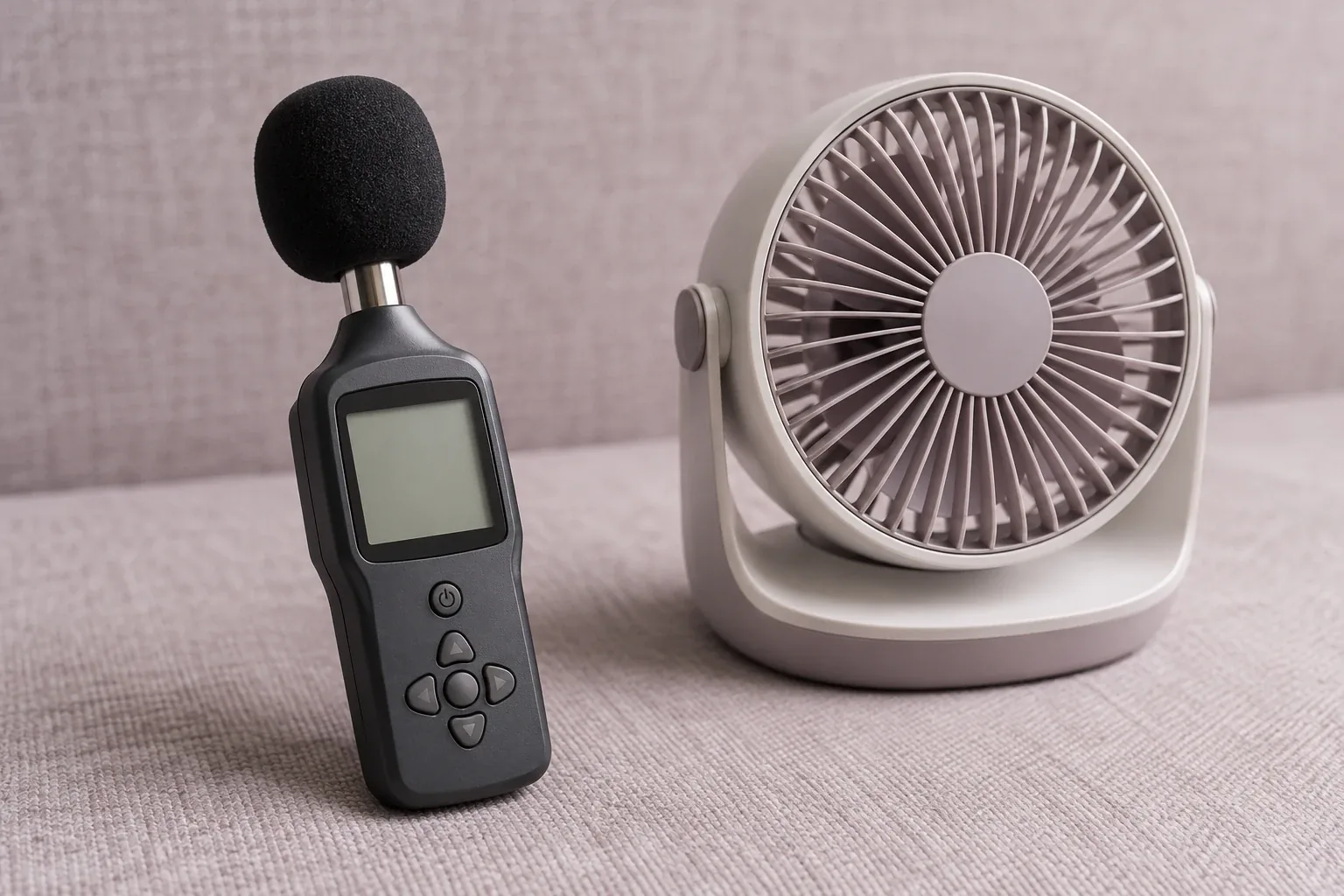
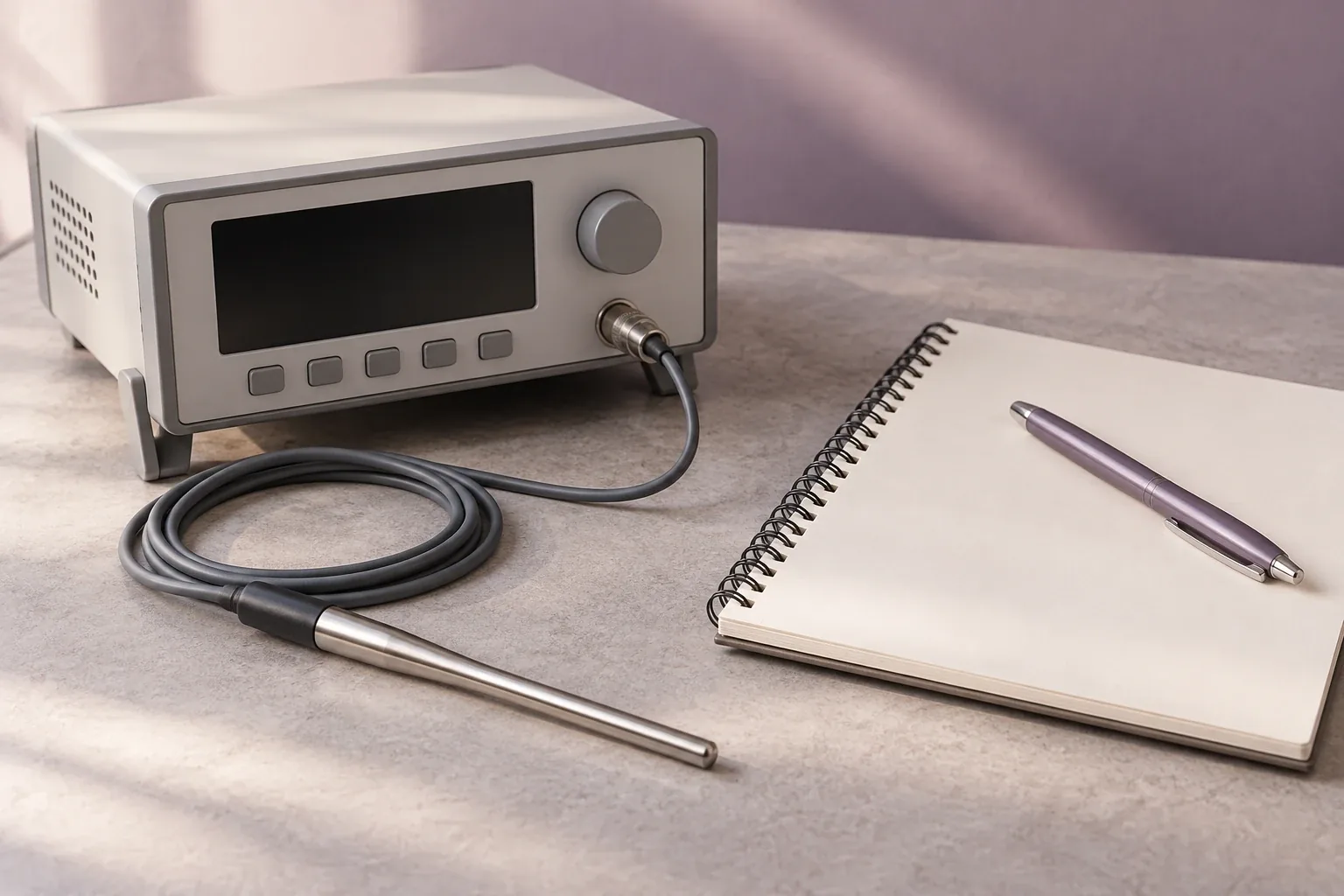
Filter tests and device tests: first identify what was measured
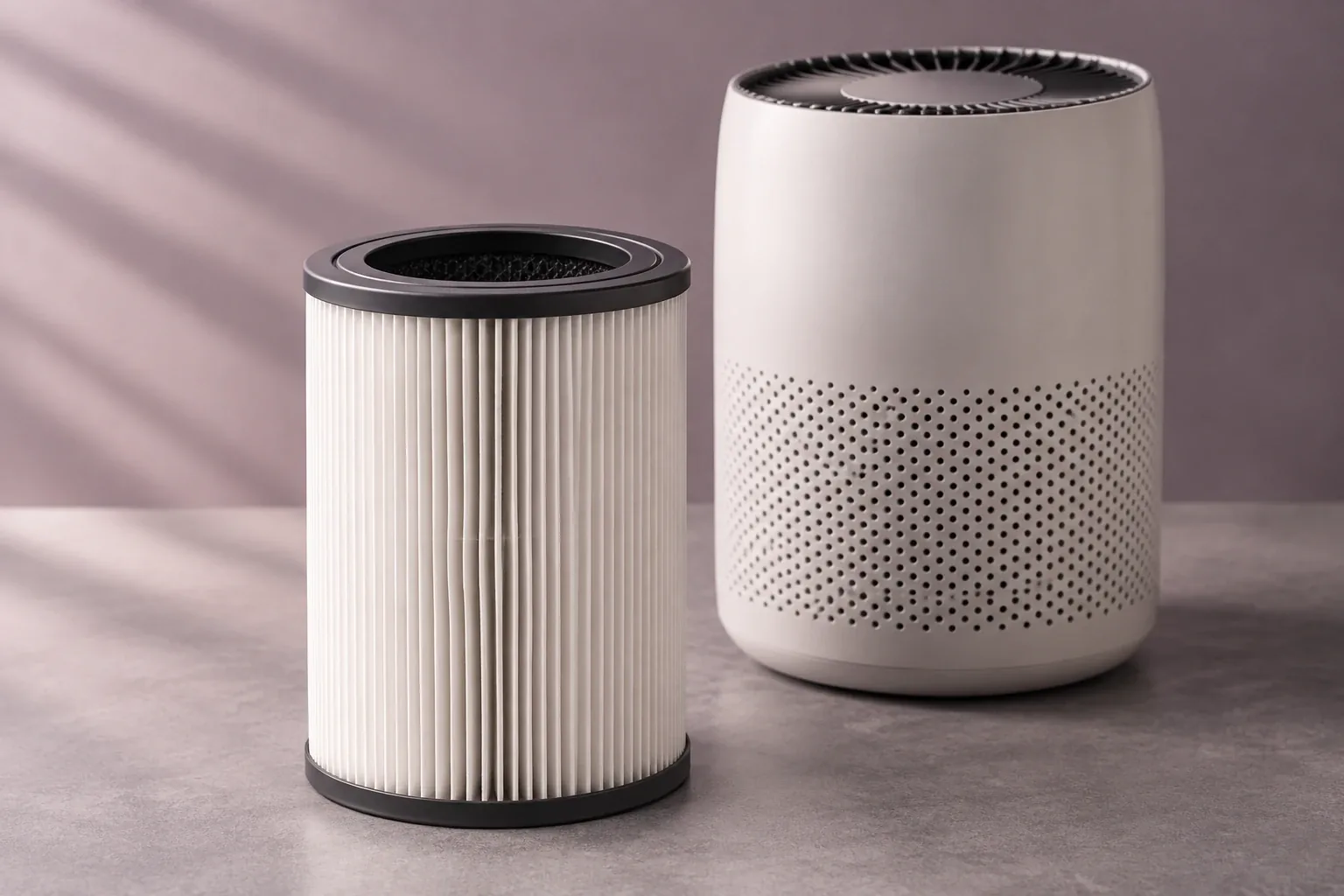
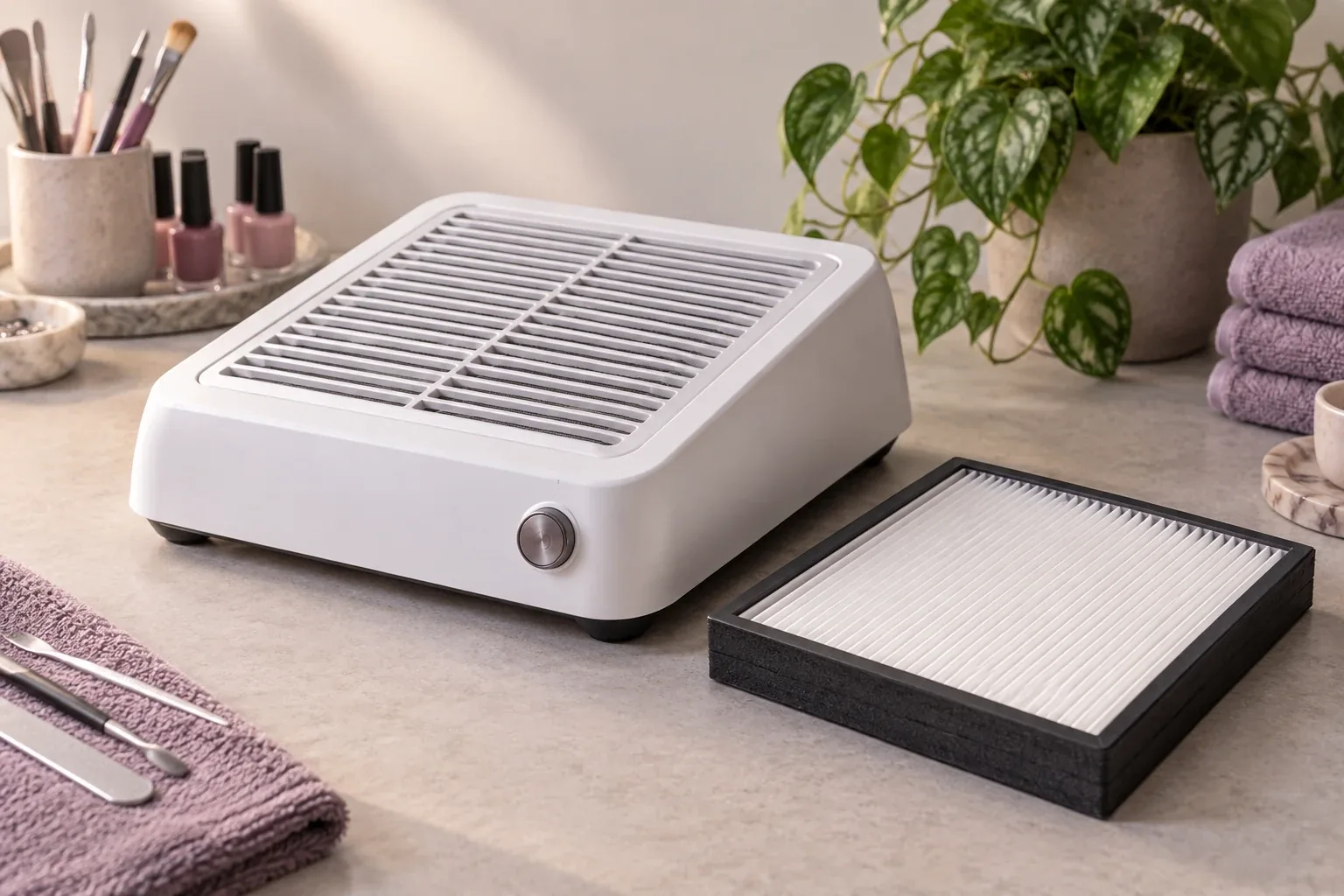
A filter test characterises a specified filtering material or component under a method. A finished-device test evaluates a different object: the assembled unit operating in a defined arrangement. One result does not automatically stand in for the other. [1][2]
KEY TAKEAWAYS
Identify the tested object and method
Write whether the report names a sheet of media, a filter element or an assembled device. ISO 29463-4’s public description concerns leakage testing of filter elements by a scan method; that method title is not a whole-device dust-capture result. The public summary, not the full paid standard, was examined here. [1]
Efficiency needs a particle and flow context
EPA’s residential technical summary discusses particle-size-specific removal and metrics for fibrous media. It identifies airflow, particle size and test basis as relevant to interpreting efficiency. These are filtration concepts from a home-air-cleaner document, not measurements of a named nail collector. [2]
The installed air path can change the result
EPA identifies dust loading, airflow resistance and air bypassing the filter as factors in system performance. A media result omits the housing and bypass path unless they were part of the tested object. Filtration of air reaching a filter and capture of dust near its source are therefore separate evidence questions. [2]
What CE marking and a declaration of conformity mean
The European Commission explains that the manufacturer is responsible for assessing conformity with the applicable EU legislation, preparing technical documentation, issuing the EU declaration of conformity and affixing CE marking. The declaration states the manufacturer’s responsibility for that conformity. Whether a notified body must participate depends on the product and applicable assessment route; CE is not a universal promise that an independent laboratory tested every performance claim. [3]
Our reading: a conformity statement and a particle-capture result are different records. To evaluate a numerical capture claim, retain the tested device, configuration, method and result. A CE logo alone supplies none of those measurements; a filter-element result likewise cannot become a whole-device result merely because the finished product bears CE marking.
Article Sources
- International Organization for Standardization — ISO 29463-4:2011 — High-efficiency filters and filter media for removing particles in air — Part 4: Test method for determining leakage of filter elements-Scan method
Primary source
Introduction and Scope of publicly available 2011 edition: particle counting at MPPS; whole filter-element leakage scan; this explains a test principle, not a claim that an old edition is the latest.
Catalogue publication:
- US Environmental Protection Agency (EPA) — Residential Air Cleaners: A Technical Summary, third edition
Primary source
Cover: EPA 402-F-09-002, third edition. Printed page 2: residential scope; 7–8 and 33–34: CADR/cfm, efficiency × airflow, maximum-speed ratings and noise; 16: single-pass efficiency versus effectiveness in the occupied space; 19–20: fibrous media and particle-size metrics; 22–25: loading, resistance and bypass. Printed and one-based PDF page numbers match.
Date on PDF cover:
- European Commission — CE marking: manufacturers
Primary source
Manufacturer responsibilities and steps 1–6: applicable legislation, conformity route, technical documentation, declaration and CE marking; notified-body involvement depends on requirements.
Written and reviewed with AI assistance using the linked sources. No hands-on product testing or independent specialist review was performed.
Commercial resource from our ecosystem
The project owner states that BELOM A2 has completed laboratory testing and that documentation for the applicable EU CE-marking requirements is prepared. NailWiki has not examined the reports or conformity declaration. We therefore publish no BELOM A2 filter class, airflow, noise value or capture percentage. A CE mark is not an independent dust-capture rating.
BELOM develops equipment for nail professionals. Brand information is available on the official BELOM website. A commercial brand link is separate from the sources supporting this article.
Professional nail materials and tools with NailMarket.eu — a shop in our ecosystem.
NailWiki, BELOM, NailMarket, BELOM App and NaNails are projects of BELOM Group OÜ, as identified by the owner. Molokom catalogue images are supplied through our NaNails shop; this commercial relationship is not independent product-test evidence.