Liquid-and-powder acrylic systems: what is in each part
A liquid-and-powder (L&P) acrylic system is supplied as two parts designed to form a coating when combined: a liquid of reactive monomers and a powder of small polymer beads that carries the starter chemistry. NailKnowledge describes the liquid as a blend of monomers and a catalyst, with ethyl methacrylate the most common monomer, and the powder as millions of small beads of polymerised acrylic holding heat-sensitive initiators, typically benzoyl peroxide. This article explains the two components and why their ratio matters; it gives no ratios, handling steps or product recommendations. [1]
KEY TAKEAWAYS
- The liquid is a blend of monomers and a catalyst, and ethyl methacrylate is the most common monomer according to NailKnowledge; the 2005 Cosmetic Ingredient Review (CIR) Expert Panel abstract also calls it the primary monomer in nail enhancement products. [1][2]
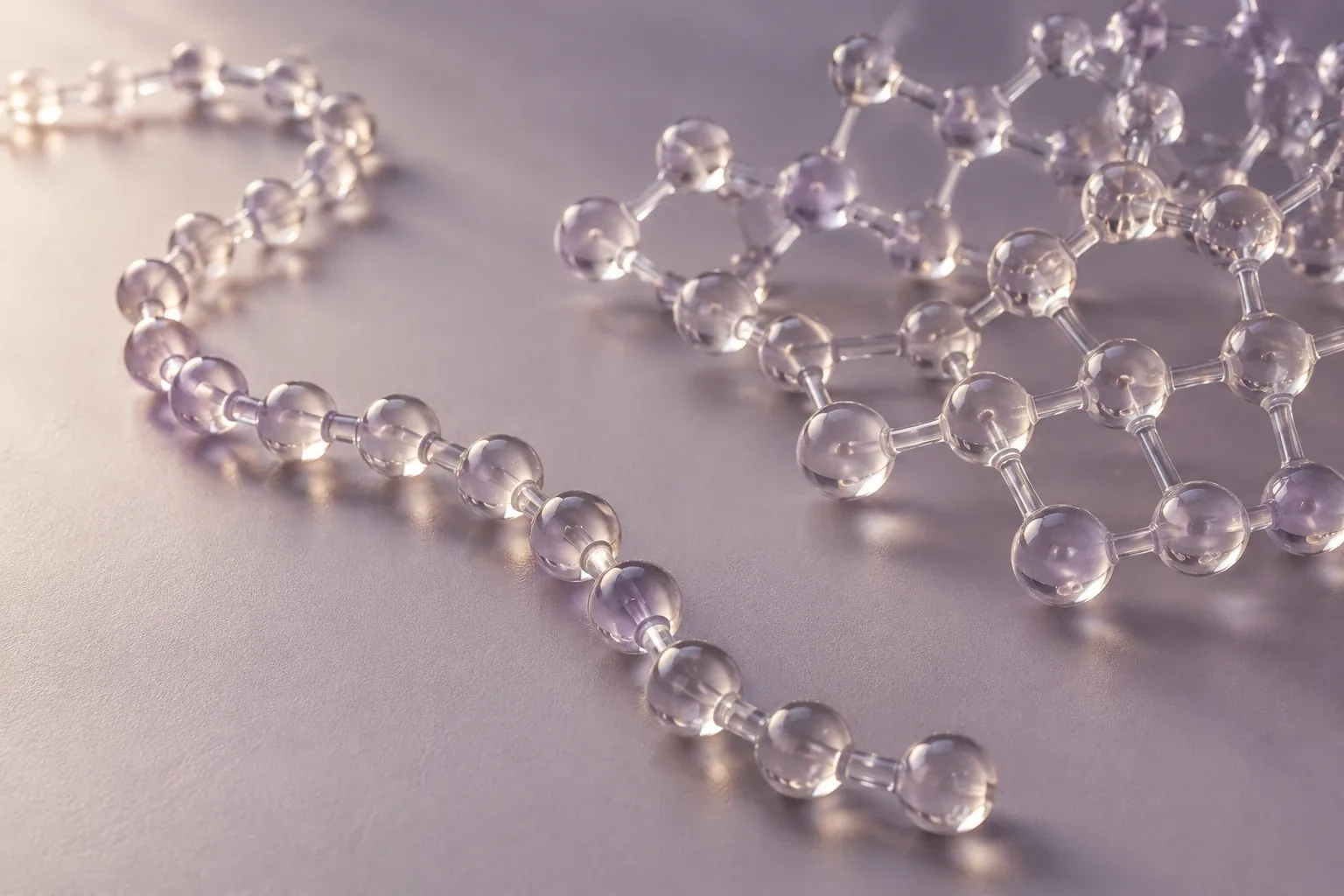
- The powder is made of small beads of polymerised acrylic that carry a heat-sensitive initiator, typically benzoyl peroxide; when the two parts meet, the monomers join together. [1]
- NailKnowledge says an unsuitable powder-to-liquid balance can leave a coating weak or brittle. The right balance belongs to the exact product system, not to a universal acrylic recipe. [1]
The two parts of an L&P system
Liquid. According to NailKnowledge, the liquid part contains a blend of monomers and a catalyst. Monomers are small reactive molecules that can link into long chains; the most common one in L&P, the page says, is ethyl methacrylate (EMA). The Cosmetic Ingredient Review Expert Panel's 2005 safety assessment agrees that ethyl methacrylate is the primary monomer used in nail enhancement products, adds that other methacrylate esters are also used, and says these monomers undergo rapid polymerisation to form a hard material on the nail that is then shaped. Only the abstract of that report was read for this article. [1][2]
Powder. NailKnowledge says this part contains millions of small beads of polymerised acrylic. The beads carry other ingredients, including initiators, typically benzoyl peroxide (BPO). The pre-existing polymer beads and the reactive liquid therefore have different roles; “powder” does not mean simply a dried version of the liquid. [1]
| Part | Main material | Reaction-related role |
|---|---|---|
| Liquid [1] | Blend of reactive monomers; ethyl methacrylate is named as the most common. | The source calls a liquid-side helper a catalyst but does not identify it. |
| Powder [1] | Small beads of already-polymerised acrylic. | Carries initiator chemistry, typically benzoyl peroxide. |
Why both parts are needed, and why the ratio matters
NailKnowledge explains that when the two parts meet, the thermal initiators within the polymer powder meet the monomers and make them join together. In that description, the reactive liquid and the initiator-bearing powder play complementary roles. The system name refers to their intended combination; it does not establish that an arbitrary liquid and powder are compatible. [1]
The mix ratio describes how much liquid is paired with how much powder. NailKnowledge explains that an unsuitable balance can leave the coating weak or brittle. That makes ratio part of a specific system’s instructions, not a universal number to infer from the word acrylic. No mixing ratio or application procedure is given here. [1]
What the sources do not settle
Hypothetical example: a buyer sees a powder from one maker and a liquid from another, both described as acrylic. The component description above puts the initiator in the powder and the monomer in the liquid, which describes complementary component roles within a matched L&P system. It does not show that the two products in this example are compatible; the sources read give no basis for judging an untested pairing. Whether a given liquid and powder were designed to work together is a question for each manufacturer's documentation. The NailKnowledge description does not identify the liquid-side helper chemical. This guide therefore does not assign a particular formula or catalyst to every product. [1]
Scope and safety. This is component literacy, not a method. L&P materials come with safety data sheets and hazard classifications that belong to each exact product, and the CIR assessment is itself an expert-panel safety review of the methacrylate esters. Read the safety data sheet and instructions of the exact product. [2]
Article Sources
- NailKnowledge (author Kevin Nicholls) - Liquid Monomer and Polymer Powder (L&P)
Expert reference material
Sections on the liquid monomer, the polymer powder and the mix ratio of Liquid Monomer and Polymer Powder (L&P): the sentences that the liquid contains a blend of monomers and a catalyst, that the most common monomer is ethyl methacrylate, that the powder consists of millions of small beads of polymerised acrylics with thermal initiators typically benzoyl peroxide, that the initiators meet the monomers and make them join together, and that too much or too little powder or liquid can give a coating that is too weak or too brittle.
Source date:
- Cosmetic Ingredient Review Expert Panel, International Journal of Toxicology 24 (Supplement 5), 2005, pages 53 to 100; record held by US EPA HERO - Final report of the safety assessment of methacrylate ester monomers used in nail enhancement products
Expert reference material
Abstract on the US EPA HERO reference record (full report not read): methacrylate ester monomers are used as artificial nail builders, undergo rapid polymerization to form a hard material on the nail that is then shaped, and ethyl methacrylate is the primary monomer used while other methacrylate esters are also used.
Products and resources
Our related modelling department lists gels, forms and accessories. This link does not claim a classical liquid-and-powder or cyanoacrylate dip range, stock, or compatibility with the system explained here. NailMarket modelling gels and forms
Brand resource only; no A1/A2 technical, launch, testing or certification claim. BELOM equipment project