Gloss and colour: different parts of appearance

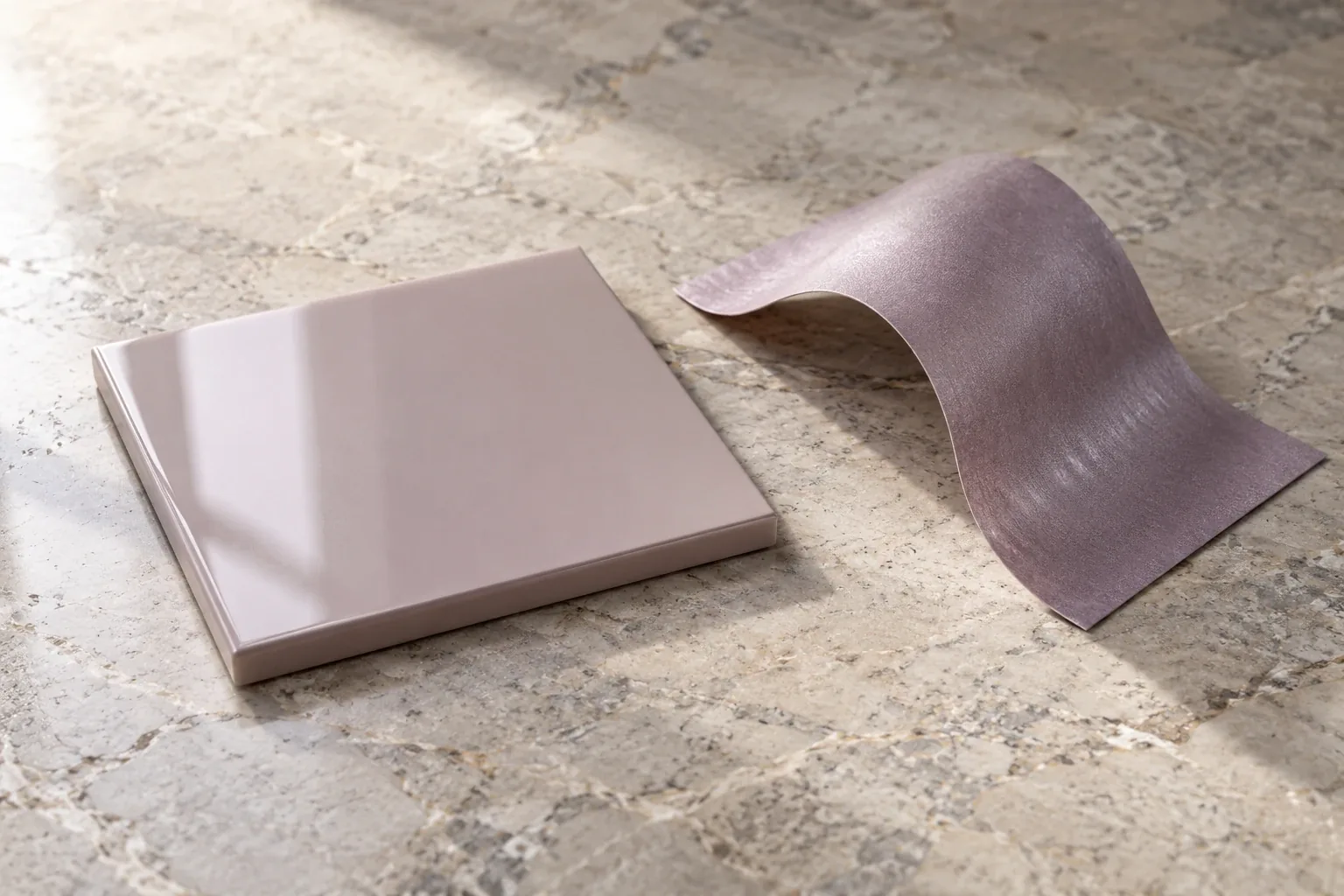
Gloss concerns how a surface reflects light in a particular direction. Colour concerns the light’s spectral character as it reaches the observer. A red coating can look glossy or matte, so “brighter”, “more colourful” and “glossier” are not interchangeable measurements. [1][2]
KEY TAKEAWAYS
The directional reflection question
Elcometer explains gloss measurement using a light source and detector placed in a controlled arrangement. The amount of reflection collected depends on that geometry and the surface. This addresses a particular optical response; it does not measure how long a nail coating lasts or whether a coating has fully cured. [1][3]
Why colour is another question
NASA’s explanation of reflection connects visible colour with the wavelengths that a material reflects. Colour and gloss can influence the overall impression together, but they remain different questions. Describing a finish as glossy does not name its colour, while describing it as red does not specify its directional reflection. [2]
Why retain the gloss measurement angle?
Elcometer describes gloss instruments with different measurement angles, including 20°, 60° and 85°. Therefore, retaining the angle matters when reading a gloss result. An instrument supplier’s explanation is useful terminology, not an independent review of a nail product. A visual comparison should likewise retain its lighting and viewing context. [1][3]
NIST’s Specular Gloss publication (August 2006) compares a sample’s specular luminous reflectance with a calibrated standard under the same conditions. This is historical metrology documentation, not a current nail-product certification. [1]
Article Sources
- National Institute of Standards and Technology (NIST) — NIST Measurement Services: Specular Gloss (SP250-70)
Primary source
Introduction and 2.1 Definitions, printed pages 1–2: directional gloss, like-for-like reflectance, measurement geometry and 20°/60°/85° angles. Metrology explanation, not current certification or nail-coating performance evidence.
Date on PDF title page:
- NASA Science Mission Directorate — Wave Behaviors
Primary source
Reflection, Absorption and Scatter passages: wavelength/material interactions and redistribution of light directions. No curing settings are inferred.
Webpage updated:
- Elcometer — Introducing the Elcometer 480 Single, Dual and Triple Angle Glossmeter
Manufacturer material
Gloss-measurement explanation: source/detector geometry, scattering and angle dependence. Manufacturer performance slogans are excluded.
Written and reviewed with AI assistance using the linked sources. No hands-on product testing or independent specialist review was performed.