Swatch carriers: matching the display method to the visual task
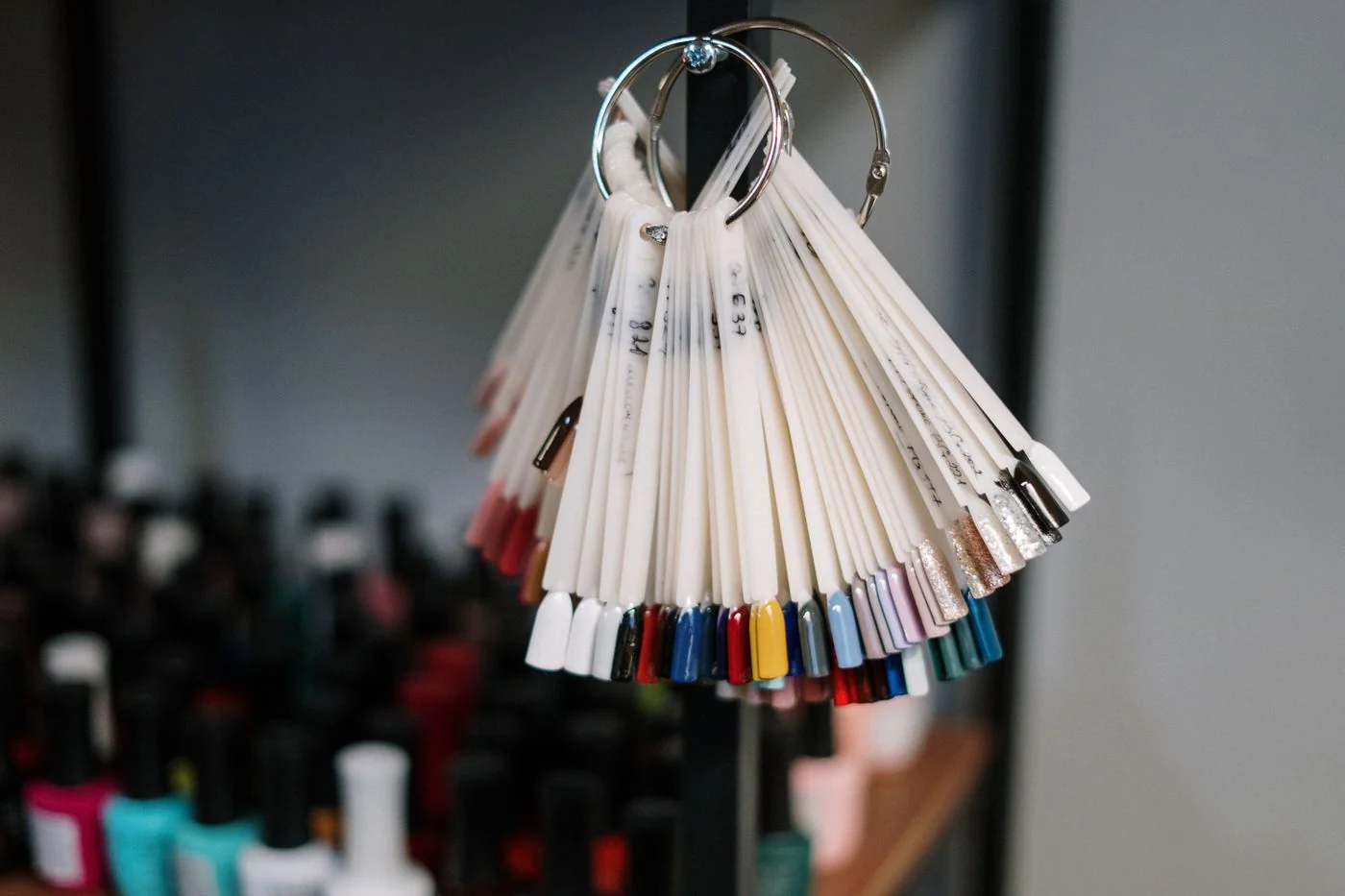
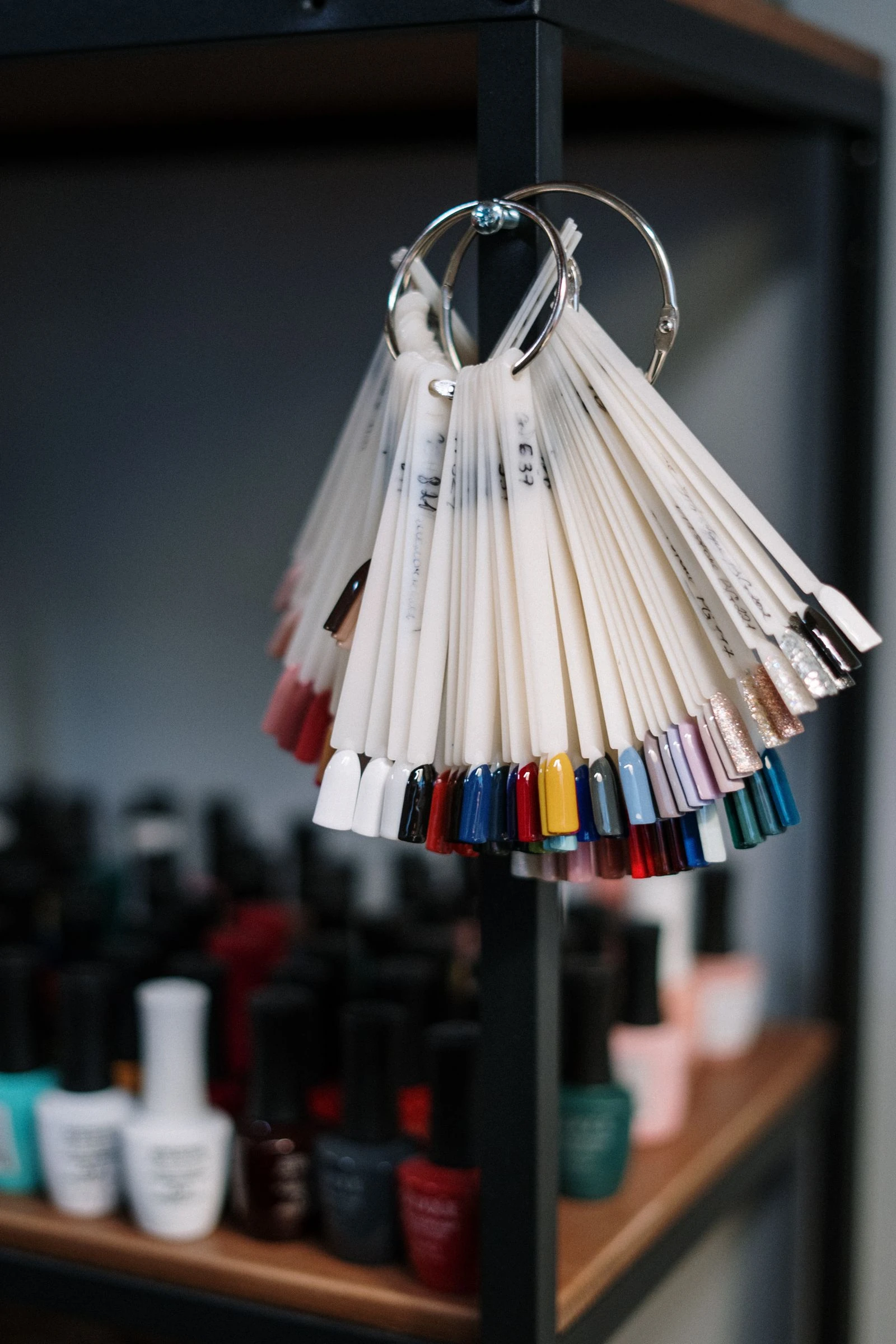
Choose a swatch carrier for the job: labelled sticks help organise individual shade samples, wheels group tips together, and display books store larger indexed sets. A painted sample and a screen image are different kinds of reference. This guide compares four actual listing descriptions and proposes a practical record method; it does not rank their measured colour accuracy. [1][2][3][5]
KEY TAKEAWAYS
- The named listings describe sticks, an 18-colour wheel, a 180-tip magnetic book and a 120-swatch book with 12 removable tabs. Check the exact pack or option. [1][2][3][4]
- Adobe advises comparing colour across screen, print and physical media; a catalogue picture is not the actual polish film. [7]
- The metamerism reference explains how reflective surfaces can match under one illuminant and differ under another. It does not test these display carriers. [5]
- Our editorial method records sample identity, background, finish and viewing light; it is not an accuracy certification. [1][2][3][4][7]
- The listings do not provide a matched carrier-accuracy experiment or a universal viewing protocol. [1][2][3][4]
The carriers as shop listings describe them
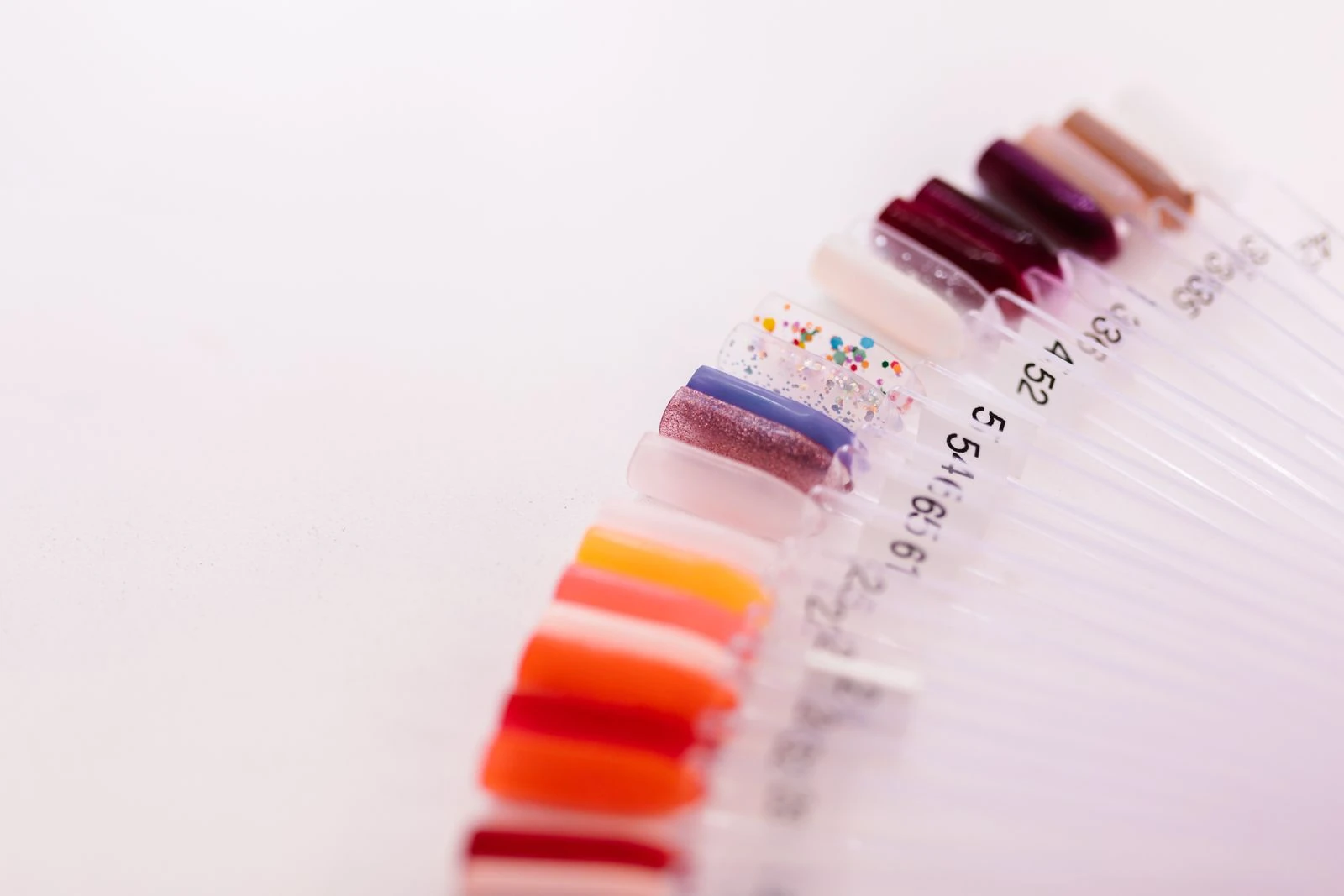
Three of the four listings read describe carriers for samples made with real product: sticks that take the product on a tip, a wheel for sampling nail polish, semi-permanent or nail art colours, and a magnetic book whose clear tips the user paints. The fourth, the Hara swatch book, is described as a customisable shade chart that holds 120 swatches across 12 removable tabs, and its page does not say whether the swatches are painted or printed or whether swatches come with it. None of the four pages gives lighting or viewing guidance. [1][2][3][4]
Some listing wording is worth checking before ordering. The Tecniwork stick page gives its count as both a pack of 50 display palettes and one set of 50 swatch sticks, and the Tecniwork wheel page describes its plastic both as natural colour and as opaque transparent plastic. The wheel page does not say whether colour samples are included. [1][2]
| Carrier | What the listing says | What the listing leaves out |
|---|---|---|
| Swatch stick (Tecniwork, TNS) [1] | Tecniwork describes a 50-stick set, tips for applying a real product sample and a flat label surface. | Lighting or viewing guidance; the pack count is given two ways. |
| Display wheel (Tecniwork) [2] | Tecniwork describes an 18-colour display wheel with curved tips for previewing against a nail. | Whether samples are included; lighting guidance; the plastic is described two ways. |
| Magnetic display book (NSI Australia) [3] | NSI’s complete option holds 180 colours, has magnetic-handled tips and includes clear tips to paint; pictured painted examples are demonstrations. | Lighting or viewing guidance and any statement of colour accuracy. |
| Customisable swatch book (Aston & Fincher, Hara) [4] | Hara’s listing holds 120 swatches on 12 removable tabs, with 10 swatches per tab. | Whether swatches are painted or printed, whether they are included, and any lighting guidance. |
Why a carrier match is provisional
The cited metamerism paper explains that reflective surfaces with different spectra can look equal under one illuminant and separate under another. It studies natural scenes, not nail-display products. That is a reason to record viewing conditions when documenting a shade comparison, not evidence that every disagreement between a swatch and a nail is metamerism. [5]
Adobe’s design guide advises previewing across screen, print and physical materials because their appearances can differ. Applied here as an editorial choice, a catalogue image helps shortlist a shade, while an identified painted sample documents the actual product used for that sample. Neither is a guarantee of an identical finished-client result. [7]
None of the four carrier listings provides a measured colour-accuracy comparison under stated lighting. Capacity, handles, removable pages and label surfaces are documented features; matching accuracy should not be inferred from them. [1][2][3][4]
Matching the task to the carrier
For an editorial swatch record, separate what the carrier stores from what the sample shows. Record the product name and variant, carrier/background, finish, how the sample was prepared according to its product instructions, and the light under which it was compared. The table suggests ways to organise those tasks; it is not a tested hierarchy of which visual attribute is easiest to judge. [1][2][3][7]
Hypothetical example: a studio organises sixteen nude shades on labelled sticks and stores a sheer and a glitter sample beside them. Its record identifies each product and sample background, keeps the preparation information with the sample, and notes the lights used for the final comparison. The example illustrates traceability and display choice, not a guarantee that the swatch will match a client’s finished set. [1][5]
| Editorial task | Record or compare | Possible carrier | Limit |
|---|---|---|---|
| Shortlist shade candidates [1][2][3][4] | Product name and exact variant | Catalogue picture, screen or sample index | A reproduction is not the actual product film. |
| Keep an identified painted sample [1][2][3][4] | Carrier/background and preparation record | A labelled stick, wheel tip or book tip | The sample documents its own preparation. |
| Record intended finish and coverage [1][2][3][4] | Named finish, background and sample notes | An identified sample and written record | No carrier is being certified as universally accurate. |
| Compare a pair under stated conditions [1][2][3][4] | Same identified samples and named viewing lights | Portable samples that can be viewed together | A mismatch alone does not diagnose its cause. |
| Preview placement against a nail [1][2][3][4] | Documented handle or curved-tip feature | Named Tecniwork wheel or NSI magnetic tip | Supplier feature does not prove finished-result equivalence. |
| Retrieve a shade later [1][2][3][4] | Stable product/variant identifier | Labelled sticks or an indexed book | Keep the identifier connected to the source product. |
What this guide cannot show
The listings are shop pages whose wording is marketing; none tests colour accuracy, compares carriers or gives viewing conditions. No page read describes a printed colour card, so that row of reasoning rests on the metamerism definition and Adobe's general advice, not on a listing. Hara's page also makes a claim about skin-tone matching, which this guide neither repeats nor assesses. The task-to-carrier table is editorial synthesis, and photographs are covered separately in the existing article on swatch photo comparison. [1][2][3][4][5][7]
Article Sources
- Tecniwork S.p.A. - Nail Swatch Sticks palette for nail colour samples TNS 50 pcs
Commercial source material
Product page 'Nail Swatch Sticks palette for nail colour samples TNS 50 pcs' (Tecniwork S.p.A.): 'Each stick allows the product to be applied to the tip, creating a real colour sample.', 'Ideal for sampling and displaying up to 50 nail colours', 'Made of smooth, durable plastic', the flat-surface sentence about writing the colour code or name or applying a small adhesive label, and the two pack-count statements. The page gives no viewing guidance.
- Tecniwork S.p.A. - Display wheel for nail polish colours
Commercial source material
Product page 'Display wheel for nail polish colours' (Tecniwork S.p.A.): 'Ideal wheel for displaying up to 18 colours', 'Its curved shape is ideal for trying the tip directly on the customer's nails', and the two descriptions of the plastic ('natural colour' and 'opaque transparent plastic'). The page does not say whether samples are included and gives no viewing guidance.
- NSI Australia - Pro Magnetic Swatch Colour Display Book
Commercial source material
Product page 'Pro Magnetic Swatch Colour Display Book' (NSI Australia): the magnetic dots and boards sentence, 'Holds 180 Colours as standard with tips', the small magnetic handle sentence about previewing colours over natural nails, the demonstration-only note and the statement that the actual product includes clear nail tips to paint. No lighting or viewing guidance.
- Aston & Fincher Ltd - Hara Nail Swatch Book
Commercial source material
Product page 'Hara Nail Swatch Book' (Aston & Fincher Ltd): 'customisable shade chart', 'holds 120 swatches across 12 removable tabs' and the sentence about technicians matching gel polish and builder gel shades to clients. The page does not say whether swatches are painted or printed or included, and gives no lighting guidance.
- Journal of the Optical Society of America A 2006;23(10):2359-2372 (Foster, Amano, Nascimento and Foster), via PubMed Central - Frequency of Metamerism in Natural Scenes
Primary source
Introduction of 'Frequency of Metamerism in Natural Scenes' (J Opt Soc Am A 2006;23(10):2359-2372): surfaces with different spectral reflectances that with some illuminant produce equal sensor responses, and the passage on becoming distinguishable with an illuminant change. The abstract's frequency findings are not used.
- Image Engineering - Color Rendering Index (CRI): Understanding Light Quality
Commercial source material
Technical note 'Color Rendering Index (CRI): Understanding Light Quality': the criticisms that only 8 colour samples were compared and that the CRI is not correlated to human vision, and the reference illuminant statement.
- Adobe (Adobe UK) - Colour Wheel Combinations
Commercial source material
Page 'Colour Wheel Combinations' (Adobe UK; undated, 2026 copyright line only): 'Step 4 - Test your colour palette.', the advice to preview colours on screen, in print and on physical materials because they appear different in each.
Products and resources
A NailMarket department whose description says it lists display tips in round, square, ballerina and stiletto shapes and tells shoppers to check whether a listing includes a ring, holder or display base for organising shade samples. A catalogue category only; no stock or colour-accuracy claim is implied. NailMarket nail colour charts
Brand resource only; no A1/A2 technical, launch, testing or certification claim. BELOM equipment project